V&A
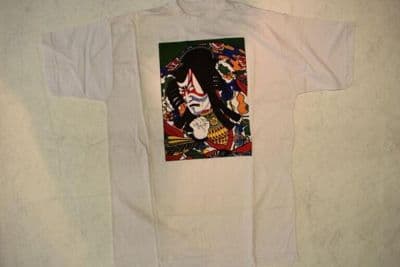
White Cotton T-Shirt with Japanese Graphic Print
1990s · 1990s · Japanese
Production
mass-produced
Material
cotton
Culture
Japanese
Movement
Japonisme · Hip-Hop
Influences
Japanese kabuki theater imagery · 1990s streetwear graphics
A white cotton t-shirt featuring a large rectangular graphic print on the front. The print depicts traditional Japanese imagery with dramatic figures in black, red, and gold tones, appearing to show samurai or kabuki-inspired characters in dynamic poses. The artwork has the bold, high-contrast aesthetic typical of 1990s screen-printed graphics, combining traditional Japanese visual elements with contemporary streetwear presentation. The t-shirt itself has a standard crew neck and short sleeves with a boxy, relaxed fit characteristic of mid-1990s casual wear. The print technique creates sharp color boundaries and appears to be a multi-color screen print application on plain white cotton jersey.
top/t-shirt/sweatshirtregular fitcrew neckhip length
Connected To
61%
Movement·JaponismeTechnique·screen-printing
SHARED10 years · cross-culture
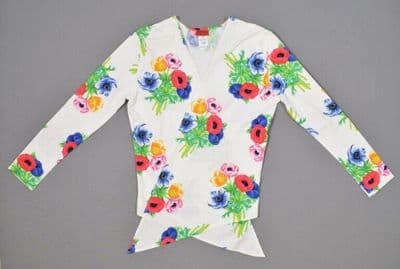
The chaotic samurai warriors splashed across the '90s tee and the scattered anemones blooming on the '80s jersey both deploy the same visual trick: floating graphic elements that refuse the tyranny of textile borders. Where the French top scatters its flowers like Monet's garden exploded across white cotton, the Japanese shirt plants its feudal drama with the same anarchic energy, each print treating the garment as a canvas rather than clothing.
Echoes Across Time
Great Depression → 1990s · 60yr56%
SHARED
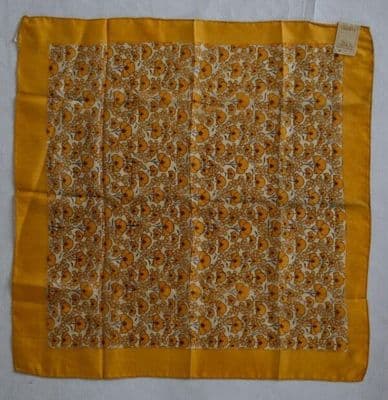
That golden silk handkerchief with its delicate amber florals scattered across cream represents the refined end of Japan's textile export boom during the Depression, when the country flooded Western markets with affordable luxury goods that still maintained traditional block-printing craftsmanship.
Movement·Japonisme
1990s → Fin de Siecle / Gibson Girl · 90yr54%
SHARED
Pull the Thread→
Follow this garment wherever the graph leads