V&A
Red Navy Cream Meisen Silk Contemporary Kimono
Japanese Traditional · 2010s · Japanese
Designer
Sudo Reiko
Production
artisan-craft
Material
meisen silk
Culture
Japanese
Movement
Contemporary Craft Revival
Influences
traditional meisen technique · contemporary textile art
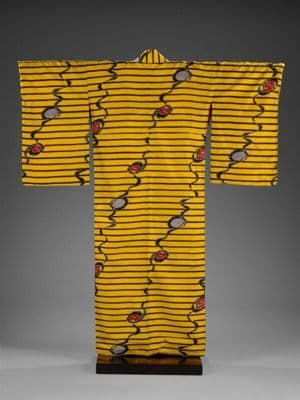
This contemporary kimono displays the traditional T-shaped silhouette with wide, straight sleeves and floor-length proportions. The meisen silk fabric features a bold geometric patchwork pattern created through stencil-dyeing of both warp and weft threads before weaving. The design incorporates interlocking rectangular blocks, chevron patterns, and striped elements in a vibrant palette of red, navy, cream, and gold. The double ikat technique creates slightly blurred edges where colors meet, characteristic of meisen textiles. This piece represents a modern revival of the meisen weaving tradition from Isesaki, combining traditional Japanese construction methods with contemporary artistic sensibilities in both pattern and color application.
dressloose fitfloor length
Connected To

Influences·contemporary textile artFunction·avant-garde
SHAREDsame era · cross-culture · cross-category
Both garments reject their cultures' traditional approaches to pattern and silhouette, but through opposite strategies. The Chinese ensemble strips away ornament entirely, letting the cut velvet's subtle texture and architectural draping speak in whispers, while the Japanese kimono explodes with a riotous geometric patchwork that feels more Memphis Group than tea ceremony.
Echoes Across Time
Victorian Early / Crinoline → Japanese Traditional · 160yr68%
SHARED
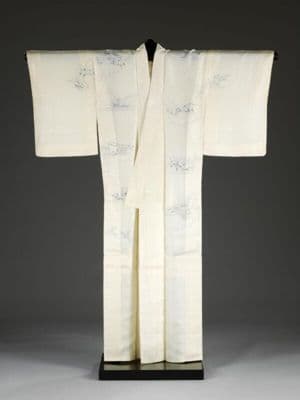
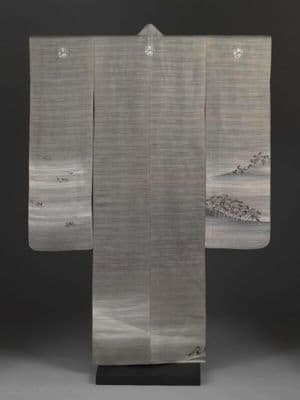
The gossamer landscape kimono whispers where the meisen silk shouts—both garments reveal how Japanese textile artisans have always understood that a kimono's surface is pure canvas, whether for misty mountain scenes dissolved in silk gauze or bold geometric chevrons that dance across the body like jazz-age confetti.
Worn with·obiWorn with·undergarmentsTechnique·hand-weaving
Pull the Thread→
Follow this garment wherever the graph leads