1990s · 2010s · Chinese
Designer
Rui Xu
Production
artisan-craft
Material
cut solid velvet, silk pile on polyester ground
Culture
Chinese
Movement
Contemporary Chinese Fashion · Minimalism
Influences
minimalist architecture · contemporary textile art
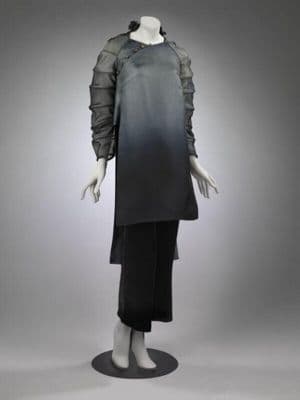
This contemporary ensemble features a distinctive textured tunic with dimensional surface treatment created through cut velvet technique, where the silk pile creates raised geometric patterns against the polyester ground. The tunic has an oversized, boxy silhouette with long sleeves and falls to mid-thigh length. The surface shows a grid-like pattern of raised velvet squares creating tactile depth and visual interest through light and shadow play. Underneath, black cropped wide-leg trousers provide structural contrast to the fluid upper garment. The monochromatic gray-to-black palette emphasizes the textural qualities of the cut velvet work. The overall construction demonstrates contemporary Chinese fashion design's approach to traditional textile techniques applied to modern minimalist silhouettes.
Follow this garment wherever the graph leads
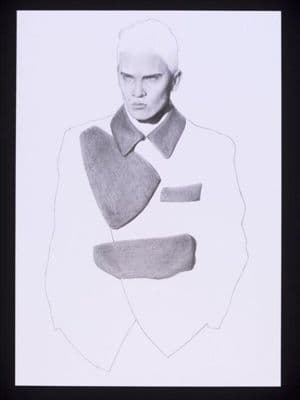
Both pieces speak the same architectural language, just in different dialects. The velvet ensemble's sharp-shouldered silhouette and geometric color blocking—that decisive shift from charcoal to black at the hemline—shares DNA with the sweater's bold asymmetrical patches of white and gray that wrap around the torso like a building's facade.
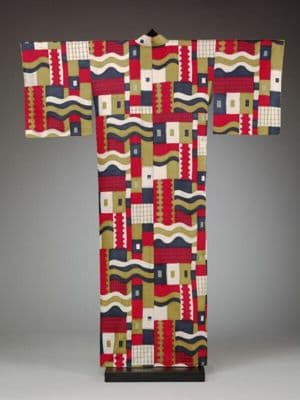
Both garments reject their cultures' traditional approaches to pattern and silhouette, but through opposite strategies. The Chinese ensemble strips away ornament entirely, letting the cut velvet's subtle texture and architectural draping speak in whispers, while the Japanese kimono explodes with a riotous geometric patchwork that feels more Memphis Group than tea ceremony.
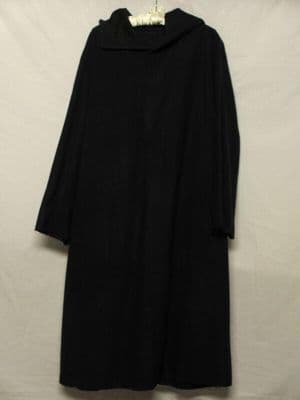
Both garments strip clothing down to its most essential geometry—the Chinese ensemble with its boxy tunic floating over wide-leg trousers, the Japanese coat as a monolithic column punctuated only by that severe hood. The velvet piece whispers its luxury through texture alone, while the wool coat makes drama from pure volume, but they're both practicing the same minimalist religion: maximum impact through ruthless reduction.
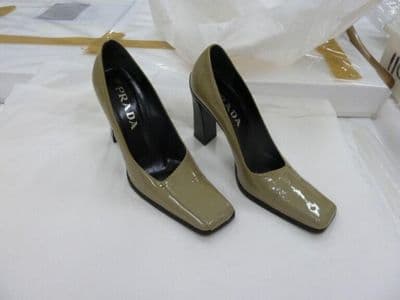
These pieces speak the same architectural language, just in different dialects. The tunic's severe geometric cut and those pumps' aggressively squared-off toes both channel the brutalist minimalism that swept through fashion in the '90s and early 2000s—one through soft draping that somehow feels structural, the other through patent leather so rigid it could be molded concrete.