1990s · 2000s · Japanese
Designer
Yohji Yamamoto
Production
ready-to-wear
Material
wool
Culture
Japanese
Movement
Japanese Avant-garde · Minimalism
Influences
Japanese avant-garde tailoring · minimalist architecture
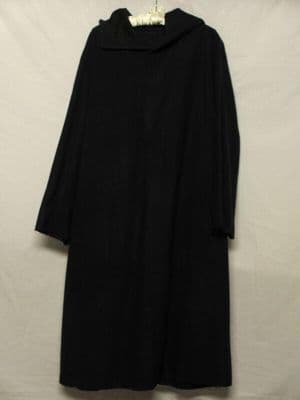
A long black wool coat with an oversized, architectural silhouette characteristic of Japanese avant-garde design. The garment features a substantial hood that creates dramatic volume around the neckline and shoulders. The coat appears to have a straight, columnar cut that falls to approximately mid-calf length, with minimal shaping through the torso. The sleeves are generously proportioned, contributing to the overall cocoon-like silhouette. The wool appears to be a substantial weight, possibly melton or similar coating fabric, with a matte finish. The construction emphasizes clean lines and geometric form over decorative elements, reflecting the minimalist aesthetic of Japanese contemporary fashion design.
Follow this garment wherever the graph leads
Lineage: “Japanese avant-garde tailoring”
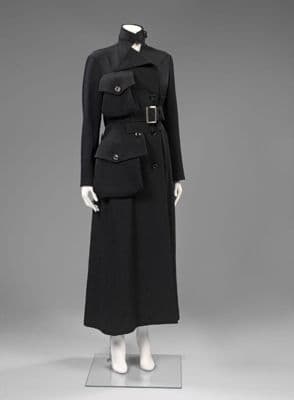
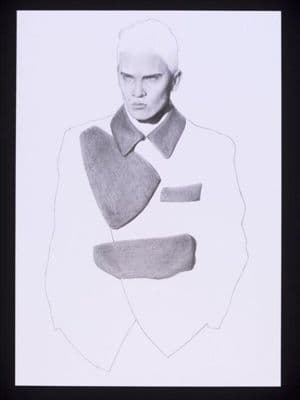
These two Yamamoto pieces show how the designer's deconstructed tailoring evolved from militant precision to monastic simplicity within the same decade. The trench coat dissects classic outerwear into angular fragments—notice how the belt cuts across asymmetrical panels and pockets jut out like architectural details—while the hooded coat abandons all that structural aggression for something more primal: a black wool envelope that swallows the body whole.
These pieces speak the same architectural language across a decade—the coat's severe rectangular silhouette and the sweater's bold geometric colorblocking both translate minimalist building principles into wearable form. The Japanese coat achieves its effect through pure volume and the dramatic negative space of that oversized hood, while the English knit uses intersecting planes of color like a Mondrian grid wrapped around the body.
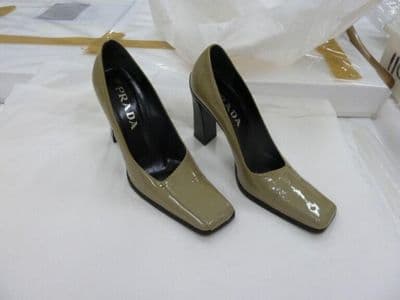
These pieces capture minimalism's split personality at the turn of the millennium — the pumps with their aggressively geometric square toe and slick patent finish represent the movement's sleek, almost corporate face, while the coat's monastic hood and enveloping silhouette channel its more spiritual, anti-fashion impulse.
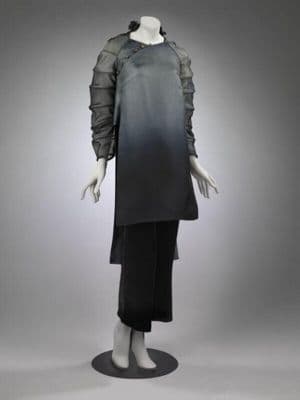
Both garments strip clothing down to its most essential geometry—the Chinese ensemble with its boxy tunic floating over wide-leg trousers, the Japanese coat as a monolithic column punctuated only by that severe hood. The velvet piece whispers its luxury through texture alone, while the wool coat makes drama from pure volume, but they're both practicing the same minimalist religion: maximum impact through ruthless reduction.