2000s · 2010s · English
Designer
Jil Sander
Production
ready-to-wear
Material
knit wool
Culture
English
Movement
Minimalism · Indie Sleaze
Influences
minimalist architecture · 1990s geometric colorblocking
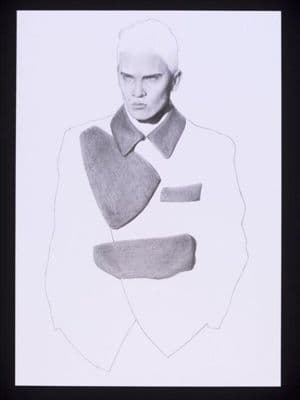
This fashion illustration depicts a minimalist knit sweater with distinctive geometric colorblocking. The garment features a white base with grey panels creating angular shapes across the chest and sleeves. The sweater has a relaxed, oversized fit typical of early 2010s menswear, with dropped shoulders and a loose silhouette. The neckline appears to be a simple crew neck. The knit construction suggests a substantial wool fabric with clean, architectural lines that reflect Jil Sander's signature minimalist aesthetic. The geometric paneling creates visual interest through contrast rather than embellishment, embodying the pared-down luxury approach characteristic of high-end contemporary menswear during this transitional period between indie sleaze and emerging minimalist trends.
Follow this garment wherever the graph leads
These two pieces speak the same minimalist language with different accents — the pink sheath's clean tunic silhouette and architectural neckline treatment echoes the sweater's geometric precision and stark colorblocking. Both garments strip away ornament in favor of pure form, the dress using its coral hue and structured simplicity while the sweater relies on graphic contrast and angular composition.
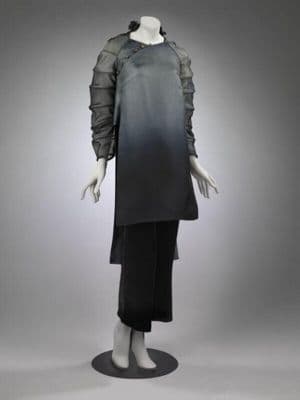
Both pieces speak the same architectural language, just in different dialects. The velvet ensemble's sharp-shouldered silhouette and geometric color blocking—that decisive shift from charcoal to black at the hemline—shares DNA with the sweater's bold asymmetrical patches of white and gray that wrap around the torso like a building's facade.
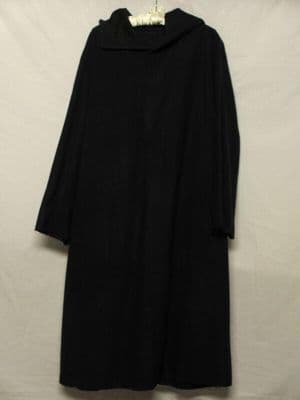
These pieces speak the same architectural language across a decade—the coat's severe rectangular silhouette and the sweater's bold geometric colorblocking both translate minimalist building principles into wearable form. The Japanese coat achieves its effect through pure volume and the dramatic negative space of that oversized hood, while the English knit uses intersecting planes of color like a Mondrian grid wrapped around the body.
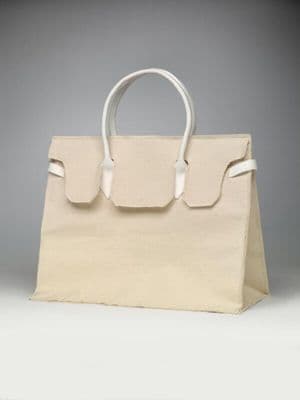
That cream tote's architectural severity—those sharp corners, the way the handles pierce through like structural beams—speaks the same minimalist language as the sweater's geometric colorblocking, where bands of white and grey wrap the torso like a building's facade. Both pieces treat the body and its extensions as canvases for pure form, stripping away ornament in favor of bold, intersecting planes that could have been lifted from a Donald Judd sculpture.