V&A
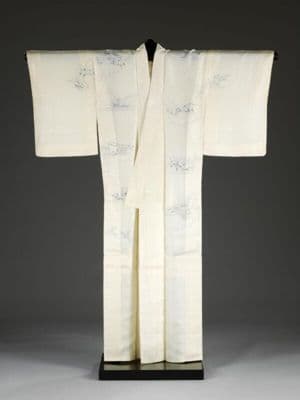
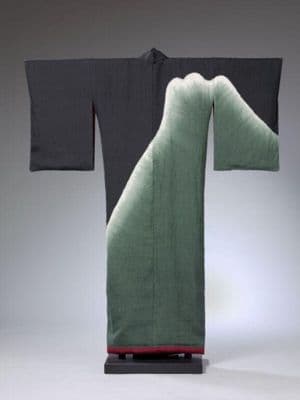
Hemp Kimono with Shibori Mount Fuji Design
2010s · 2010s · Japanese
Designer
Yamaguchi Genbei
Production
artisan-craft
Material
hemp
Culture
Japanese
Movement
Dark Academia
Influences
traditional Japanese kimono construction · Mount Fuji iconography
A traditional Japanese kimono constructed from hemp fabric in a T-shaped silhouette with wide, straight sleeves and floor-length proportions. The garment displays a sophisticated shibori tie-dye technique creating an ombre effect from deep charcoal gray at the shoulders transitioning to pale sage green toward the hem. The surface treatment suggests Mount Fuji's iconic silhouette rendered through resist-dyeing methods. The kimono maintains classical proportions with wide sleeves that extend horizontally and a straight-cut body that would wrap left over right when worn. The hemp fabric appears to have a substantial weight and natural texture, while the tie-dyed pattern demonstrates traditional Japanese textile artistry applied to contemporary production.
dressloose fitfloor length
Connected To
Worn with·obiWorn with·undergarmentsTechnique·resist-dyeing
Echoes Across Time
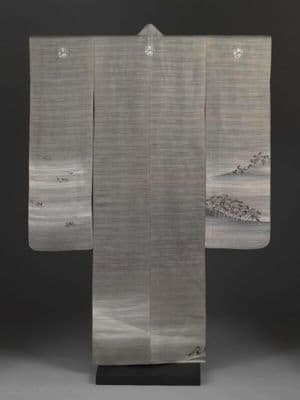
Victorian Early / Crinoline → 2010s · 160yr65%
SHARED
The gauzy Victorian kimono whispers its landscape across silk so fine it barely holds the ink, while the contemporary hemp piece shouts Mount Fuji in bold shibori that transforms the sacred mountain into pure geometric abstraction. Both garments use the kimono's generous canvas to contain nature, but where the 19th-century silk treats landscape as atmospheric suggestion—misty, almost dissolving—the modern hemp makes Fuji into a monument of tied-and-dyed defiance.
Worn with·obiWorn with·undergarmentsTechnique·resist-dyeing
Pull the Thread→
Follow this garment wherever the graph leads