V&A
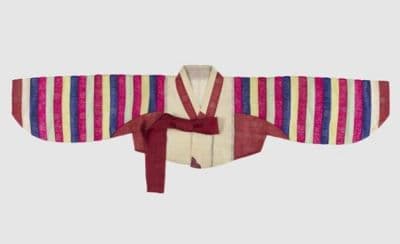
Burgundy Silk Korean Jeogori with Striped Sleeves
Great Depression · 1930s · Korean
Production
handmade
Material
silk
Culture
Korean
Influences
traditional Korean hanbok construction · Joseon Dynasty court dress
A traditional Korean jeogori featuring a short fitted bodice with dramatically wide, curved sleeves in multicolored vertical stripes. The sleeves display alternating bands of burgundy, cream, purple, and green silk. The bodice appears to be cream-colored silk with burgundy trim and traditional Korean closure ties (goreum) at the front. The garment demonstrates classic Korean hanbok construction with its characteristic short length that would sit at the natural waist, wide sleeves that taper at the wrists, and the distinctive curved sleeve shape. The striped pattern and color combination reflect Korean textile traditions while the overall silhouette maintains the timeless jeogori form that has remained consistent across centuries.
jacketloose fitv-neckabove-the-hip
Connected To
Influences·traditional Korean hanbok constructionWorn with·chima (skirt)Worn with·undergarmentsFunction
Echoes Across Time
Korean Traditional → Great Depression · 50yr76%
SHARED
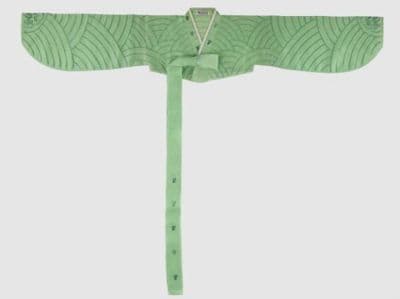
These two jeogori jackets reveal how Korean traditional dress absorbed outside influences while maintaining its essential DNA. The earlier sage green piece holds to classical hanbok proportions—those gracefully curved sleeves, the precise tie closure, the clean geometric patterning that echoes traditional Korean textiles.
Influences·traditional Korean hanbok constructionWorn with·chima (skirt)Worn with·undergarments
Pull the Thread→
Follow this garment wherever the graph leads