V&A
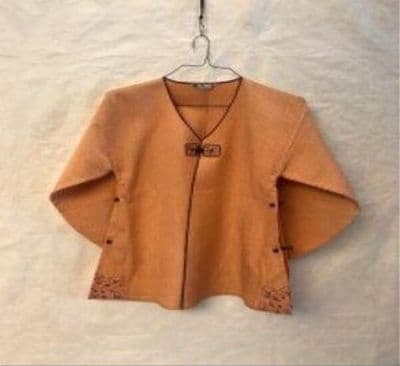
Terracotta Silk Korean Jeogori Jacket
Korean Traditional · 1980s · Korean
Production
handmade
Material
silk
Culture
Korean
Influences
traditional Korean hanbok construction
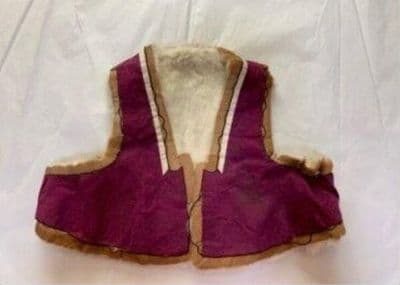
A traditional Korean jeogori jacket in warm terracotta silk, featuring the characteristic short cropped silhouette that ends at the natural waist. The garment displays classic hanbok construction with a V-shaped neckline created by overlapping front panels, secured with a single decorative tie closure at the chest. The sleeves are generously cut and flared, creating gentle curves that taper toward fitted cuffs. Subtle decorative stitching or embroidered details are visible along the sleeve edges and possibly the hem, executed in darker thread that complements the base fabric. The jacket's clean lines and structured shoulders reflect 1980s tailoring influences while maintaining traditional Korean proportions and closure methods.
jacketloose fitv-neckabove-the-hip
Connected To
Influences·traditional Korean hanbok constructionWorn with·undergarmentsFunction·religious-ceremonial
SHARED50 years
Echoes Across Time
Great Depression → Korean Traditional · 50yr67%
SHARED
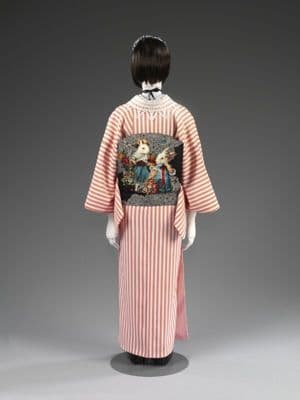
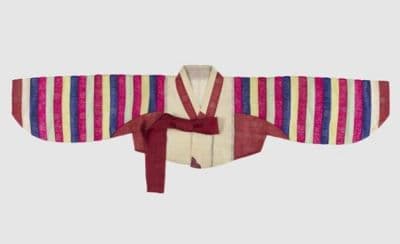
These two jeogori reveal how Korean traditional dress absorbed and deflected outside influence across the 20th century. The Depression-era piece with its candy-striped sleeves shows hanbok construction embracing Western textile patterns—those bold vertical stripes would have felt bracingly modern against the silk's traditional wrap closure and curved hem.
Influences·traditional Korean hanbok constructionWorn with·undergarmentsFunction·religious-ceremonial
Pull the Thread→
Follow this garment wherever the graph leads