THE MET
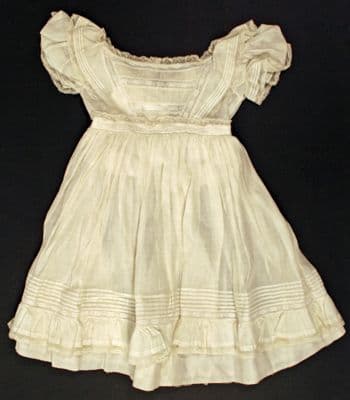
Cream Cotton Muslin Empire Waist Child's Dress
Empire / Regency · 1810s · French
Production
handmade
Material
cotton muslin
Culture
French
Movement
Neoclassicism
Influences
Neoclassical Greek chiton · Empire adult fashion scaled down
This Empire period child's dress features a characteristic high waistline positioned just below the bust, with a fitted bodice constructed from fine cotton muslin. The short puffed sleeves are gathered at the shoulders and finished with delicate ruffled edges. The skirt falls in soft, full pleats from the empire waistline, creating the columnar silhouette typical of the era. Multiple rows of fine pin-tucks create horizontal bands across the skirt, demonstrating skilled needlework. The hemline is finished with layered ruffles, adding textural interest. The neckline is wide and shallow, decorated with gathered trim that mirrors the sleeve treatment. The lightweight muslin fabric would have draped beautifully while allowing for childhood movement.
dressfit and flaresquare necklineknee length
Connected To
Movement·NeoclassicismWorn with·chemise
SHAREDsame era · cross-culture
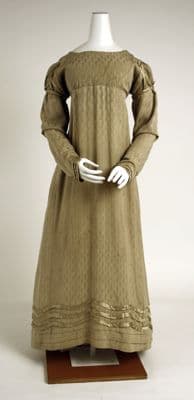
These two dresses speak the same neoclassical language, but in different dialects—the child's cream muslin whispers where the olive silk visiting dress declares. Both deploy the Empire waist's democratic promise of liberation from corseted torment, their high-tied sashes creating that telltale columnar silhouette that made every woman a Greek goddess for a brief historical moment.
Pull the Thread→
Follow this garment wherever the graph leads