THE MET
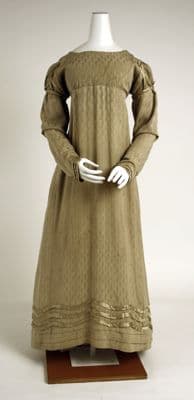
Olive Green Silk Empire Waist Visiting Dress
Empire / Regency · 1810s · American
Production
handmade
Material
silk
Culture
American
Movement
Neoclassicism
Influences
neoclassical Greek chiton · Directoire simplicity
This Empire period dress features the characteristic high waistline positioned just below the bust, creating the columnar silhouette typical of the era. The olive-toned silk fabric appears to have a subtle textured weave or pattern. The bodice is fitted through the torso with long, close-fitting sleeves that extend to the wrists. The neckline is modest and square-cut. The skirt falls in straight, unadorned lines from the high waist to the floor, embodying the neoclassical aesthetic that rejected the elaborate ornamentation of earlier periods. Multiple rows of trim or tucks are visible at the hem, providing the only decorative element on an otherwise restrained garment that reflects the period's emphasis on simplicity and natural form.
dressa-linesquare necklinefloor length
Connected To
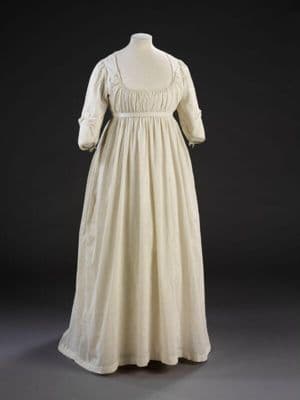
Influences·neoclassical Greek chitonMovement·NeoclassicismWorn with·chemise
Echoes Across Time
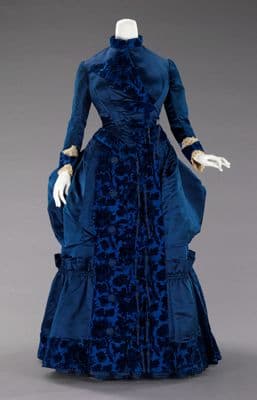
Empire / Regency → Victorian Late / Bustle · 70yr59%
SHARED
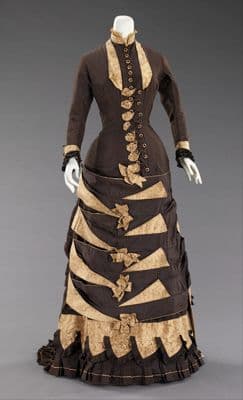
These two dresses reveal how women's fashion pivoted from Regency restraint to Victorian excess across seven decades. The olive silk's clean empire lines and minimal trim speak the language of neoclassical purity, while the navy velvet's cascading ruffles, fitted bodice, and bustle silhouette announce the Victorian obsession with architectural complexity and surface decoration.
Worn with·chemiseWorn with·corsetWorn with·petticoat
Pull the Thread→
Follow this garment wherever the graph leads