V&A
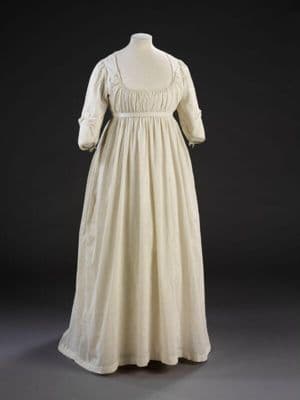
White Cotton Empire Waist Day Gown
Empire / Regency · 1800s · English
Production
handmade
Material
white cotton
Culture
English
Movement
Neoclassicism
Influences
neoclassical Greek chiton · chemise à la reine simplicity
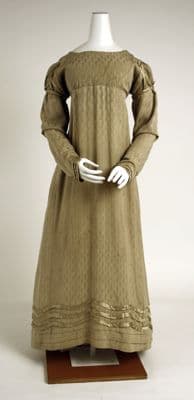
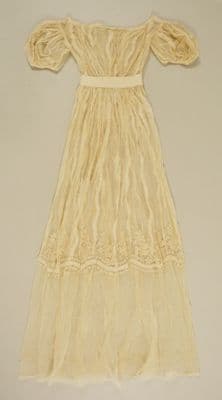
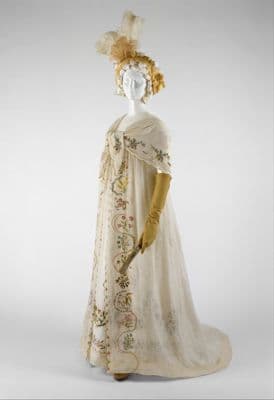
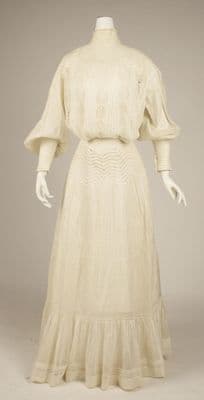
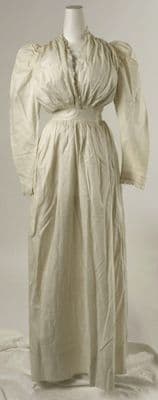
This English cotton gown exemplifies the Empire silhouette with its dramatically raised waistline positioned just below the bust, creating a long, columnar line from chest to floor. The bodice features a square neckline with gathered fabric creating soft horizontal pleats across the chest. Three-quarter length sleeves are fitted through the upper arm and gather at the cuff. The skirt falls in straight, unstructured lines from the high waist, made possible by the lightweight cotton fabric. The entire garment appears to be constructed from a single white cotton textile, likely muslin or similar plain weave, reflecting the period's preference for simple, classical-inspired forms and natural fibers over the elaborate silks and structured undergarments of the previous century.
dressa-linesquare necklinefloor length
Connected To
Influences·neoclassical Greek chitonMovement·NeoclassicismWorn with·
Pull the Thread→
Follow this garment wherever the graph leads