THE MET
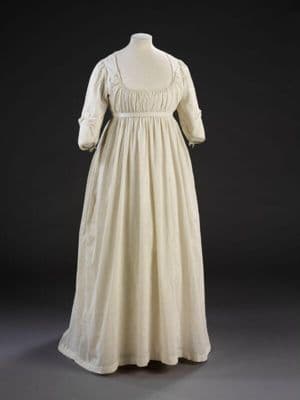
White Cotton Muslin High-Waisted Empire Gown Ensemble
Revolutionary / Directoire · 1790s · French
Production
handmade
Material
cotton muslin
Culture
French
Movement
Neoclassicism
Influences
neoclassical Greek chiton · antique drapery
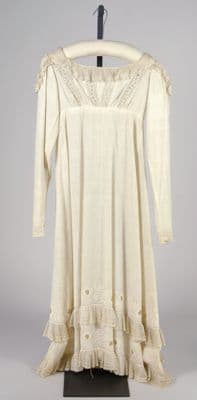
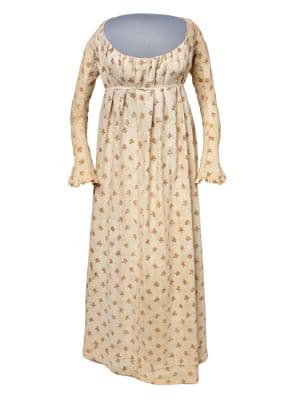
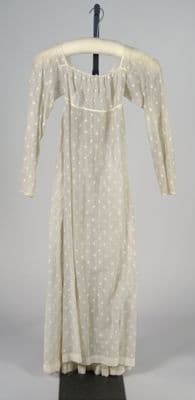
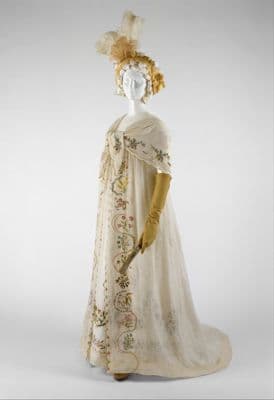
This Revolutionary period ensemble features a white cotton muslin gown with the characteristic high empire waistline positioned just below the bust. The dress displays elaborate gold and brown embroidered or printed decorative motifs arranged in vertical panels and border patterns. The long sleeves are fitted at the shoulders and wrists, while the skirt falls in straight, columnar lines from the raised waistline to create the neoclassical silhouette popular during the Directoire period. The lightweight cotton construction and minimal structural support reflect the era's rejection of aristocratic fashion conventions. A matching decorative cap or bonnet with similar ornamental detailing completes the ensemble, demonstrating the period's preference for coordinated accessories and classical-inspired ornamentation.
dressa-lineround neckfloor length
Connected To
Influences·neoclassical Greek chitonMovement·NeoclassicismWorn with·
Pull the Thread→
Follow this garment wherever the graph leads