Empire / Regency · 1810s · American
Production
handmade
Material
cotton muslin
Culture
American
Movement
Neoclassicism
Influences
neoclassical Greek chiton · chemise à la reine
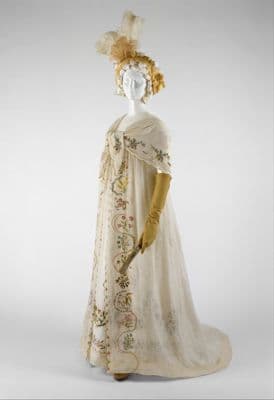
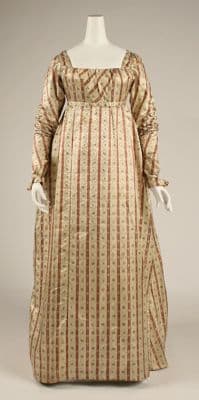
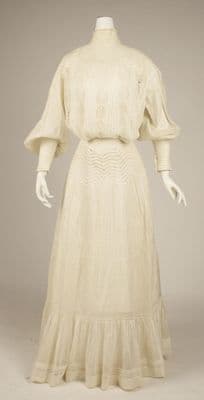
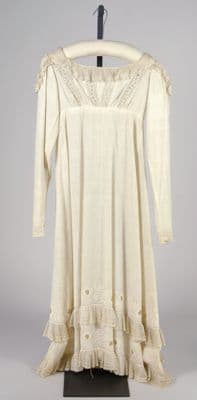
This cotton muslin dress exemplifies Empire period construction with its characteristic high waistline positioned just below the bust and flowing skirt that falls in soft vertical folds. The bodice features delicate whitework embroidery at the neckline and decorative tucks or pin-tucks creating textural interest across the chest. Long fitted sleeves extend to the wrists with gathered fullness at the shoulders. The skirt displays multiple horizontal tiers of ruffles or flounces near the hem, creating visual weight at the bottom. The lightweight muslin fabric allows for the period's preference for natural draping and movement, while the cream coloration and fine cotton material reflect the era's taste for simple, classical elegance inspired by ancient Greek and Roman dress.
Follow this garment wherever the graph leads
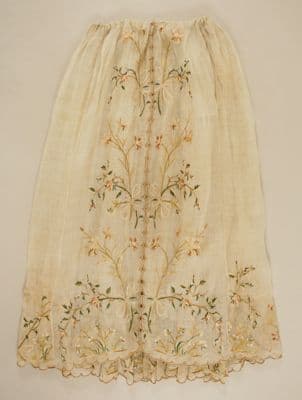
These two white muslin gowns trace the arc of neoclassical fashion from its revolutionary French origins to its American refinement twenty years later. The earlier French ensemble shows the radical simplicity that swept away aristocratic excess—that high empire waist and columnar silhouette directly channeling ancient Greek chitons, while delicate hand-embroidered florals provide the only ornament.
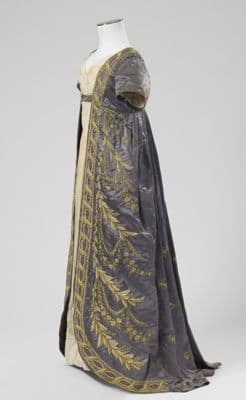
These two garments reveal how the Empire's neoclassical fever spread from French court to American parlor, translating the same Grecian fantasy into different social realities. The French silk skirt, with its intricate gold embroidery cascading like a botanical manuscript, represents the luxury version of Empire style—meant to be seen at salons and soirées where such needlework could be properly admired.
These two gowns reveal how the Empire silhouette could swing from morning simplicity to evening grandeur while maintaining its essential DNA. The cream muslin dress whispers with its delicate whitework embroidery and modest cotton, embodying the Regency ideal of studied simplicity, while the purple silk blazes with metallic gold embroidery that transforms the same high-waisted template into something fit for a court presentation.
These two Empire waists tell the story of how Regency fashion traveled and transformed across the Atlantic. The American cotton muslin dress whispers its democratic ideals through delicate white-on-white embroidery and practical fabric choice, while the British silk version speaks in a richer vocabulary of printed florals and lustrous surface that catches light like old money.