THE MET
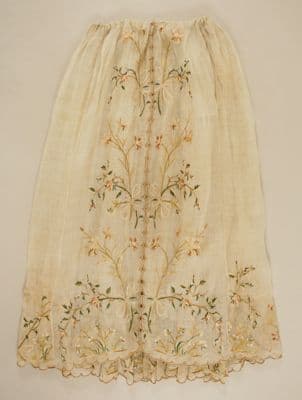
Cream Silk Empire Waist Skirt with Gold Embroidery
Empire / Regency · 1800s · French
Production
handmade
Material
silk
Culture
French
Movement
Neoclassicism
Influences
neoclassical Greek chiton · botanical naturalism
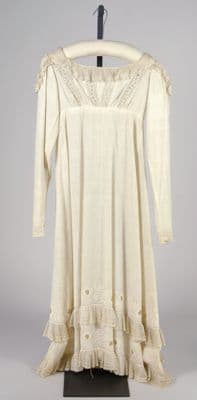
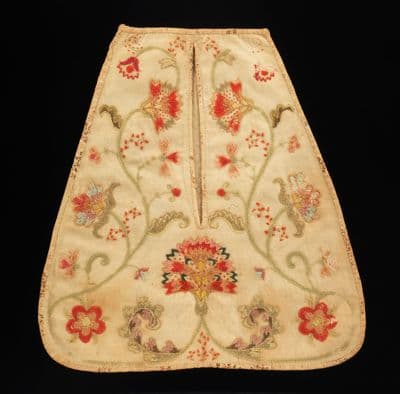
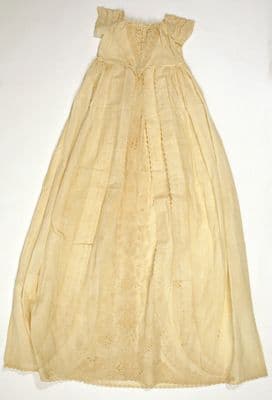
This empire-waist skirt features a cream silk ground with elaborate embroidered botanical motifs in gold and muted green tones. The skirt is gathered at a high waistline with drawstring closure, creating the characteristic columnar silhouette of the Empire period. Delicate floral sprays and trailing vine patterns are symmetrically arranged down the front panel, executed in fine silk thread embroidery. The botanical designs include stylized flowers, leaves, and curving stems that create vertical movement. The lightweight silk fabric would have draped softly over the body, eliminating the need for structured undergarments that defined earlier periods. This represents the neoclassical aesthetic that dominated European fashion during the Napoleonic era.
skirta-linefloor length
Connected To
Influences·neoclassical Greek chitonMovement·NeoclassicismWorn with·chemiseTechnique
Pull the Thread→
Follow this garment wherever the graph leads