THE MET
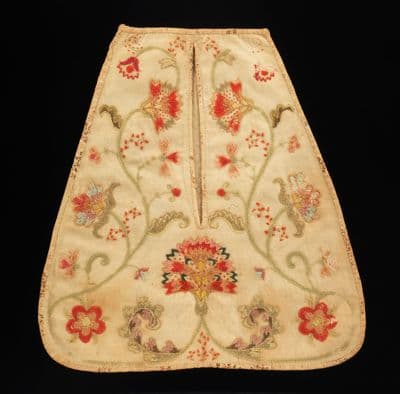
Embroidered Linen Tie-On Pocket with Floral Design
Rococo · 1750s · American
Production
handmade
Material
linen with silk embroidery
Culture
American
Influences
European crewelwork tradition
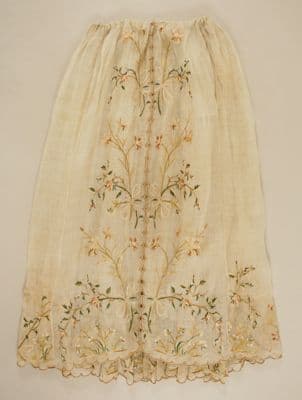
This tie-on pocket displays elaborate floral embroidery on cream linen ground. The design features symmetrical arrangements of coral carnations, sage green leaves, and golden yellow accent flowers connected by flowing vine scrollwork. A central tree-of-life motif anchors the composition at the pocket's base, with mirrored floral sprays extending upward along both sides. The embroidery appears to be silk thread worked in satin stitch and stem stitch techniques. The pocket's distinctive shield-like shape with rounded bottom and straight top edge reflects mid-18th century construction. Gold metallic thread highlights add dimensional quality to select flower centers and leaf details.
bag/wallet
Connected To
Worn with·chemiseWorn with·gownWorn with·petticoatWorn with·staysTechnique·hand-embroidery
SHARED50 years · cross-culture · cross-category
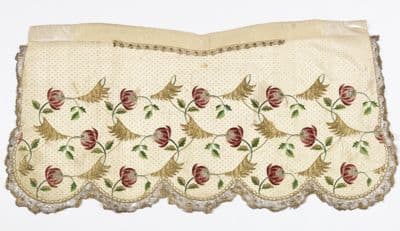
These two pieces reveal how the same decorative impulse traveled from French luxury to American practicality across half a century. The baroque apron's burgundy roses cascade in formal, symmetrical sprays across cream silk, while the rococo pocket translates that floral vocabulary into more naturalistic blooms scattered across humble linen—both pieces anchored by the same scalloped edges that frame their botanical fantasies.
Text
64%
Worn with·gownWorn with·staysTechnique·hand-embroidery
SHARED30 years · cross-culture · cross-category
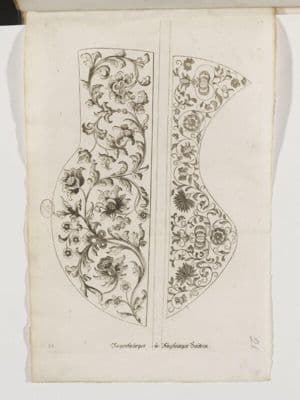
This embroidered pocket and its accompanying pattern reveal the 18th-century embroidery industrial complex in action. The German engraving provided the roadmap—those sinuous vines and scattered blooms rendered in precise black ink—while the American needleworker translated it into silk thread on linen, softening the botanical geometry into something more personal and slightly askew.
61%
Worn with·chemiseWorn with·gownTechnique·hand-embroidery
SHARED10 years · cross-culture
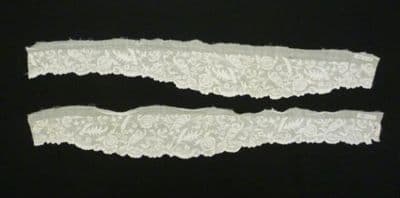
These delicate accessories reveal how 18th-century women adorned themselves in layers of embroidered luxury, whether American or English. The pocket's silk florals in coral and gold echo the same rococo sensibility as the sleeve ruffles' intricate whitework—both demanding hundreds of hours of needlework that transformed utilitarian undergarments into precious objects.
Worn with·gownWorn with·stays
SHARED30 years · cross-category
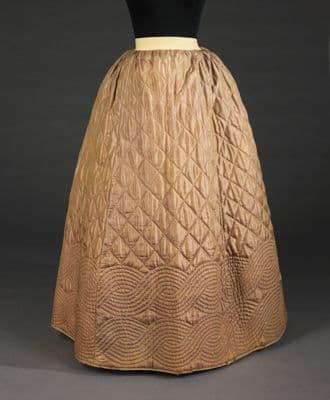
These two pieces reveal the gorgeous paradox of 18th-century American women's dress: the most elaborate handiwork was lavished on garments meant to be hidden. The quilted petticoat's intricate diamond patterns and scalloped borders would have been glimpsed only in fleeting moments when skirts lifted, while the pocket's riot of silk-embroidered carnations and roses lived tied beneath layers, touched but never seen.
Echoes Across Time
Rococo → Baroque · 50yr72%
SHARED
These two pieces reveal how the same decorative impulse traveled from French luxury to American practicality across half a century. The baroque apron's burgundy roses cascade in formal, symmetrical sprays across cream silk, while the rococo pocket translates that floral vocabulary into more naturalistic blooms scattered across humble linen—both pieces anchored by the same scalloped edges that frame their botanical fantasies.
Worn with·chemiseWorn with·gownWorn with·petticoat
Pull the Thread→
Follow this garment wherever the graph leads