V&A
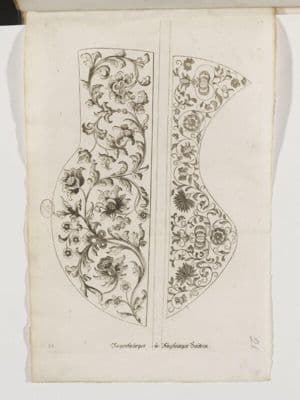
Sepia Brown Floral Embroidery Pattern Engraving
Rococo · 1720s · German
Production
handmade
Material
engraving on laid paper
Culture
German
Influences
French court embroidery · baroque scrollwork
This engraved pattern sheet displays two elaborate floral embroidery designs typical of early 18th-century needlework. The left panel features a vertical arrangement of scrolling acanthus leaves and stylized flowers in symmetrical composition. The right panel shows a curved bodice or stomacher pattern filled with densely packed rose motifs and flowing botanical elements. Both designs demonstrate the Rococo preference for naturalistic floral ornament rendered in delicate, intricate detail. The engravings would have served as templates for transferring decorative motifs onto silk or linen garments, particularly women's formal dress components like stomachers, sleeve cuffs, or apron borders.
Connected To
71%
Worn with·gownWorn with·staysTechnique·hand-embroideryFunction·court-formalMotif·spiral-scroll
SHARED20 years · cross-culture · cross-category
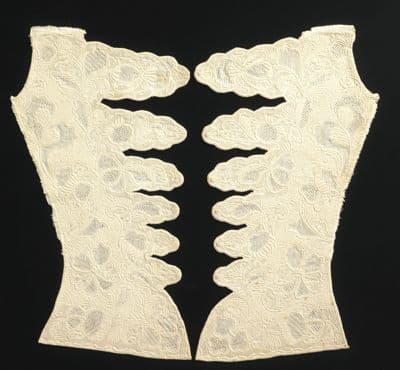
These pieces reveal how embroidery patterns migrated from engraver's studio to seamstress's workbasket across 18th-century Europe. The German engraving maps out the same spiraling vine motifs that bloom across the bodice fronts in actual thread—both deploy that characteristic Rococo vocabulary of curling tendrils and scattered blooms, but one exists as blueprint while the other transforms into wearable luxury.
Text
64%
Worn with·gownWorn with·staysTechnique·hand-embroidery
SHARED30 years · cross-culture · cross-category
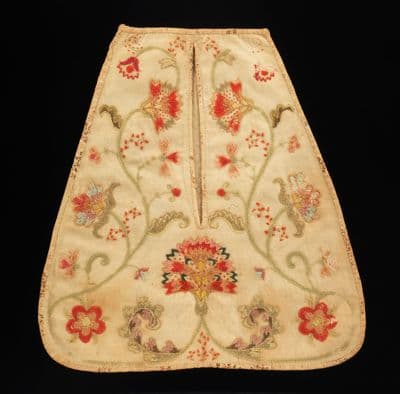
This embroidered pocket and its accompanying pattern reveal the 18th-century embroidery industrial complex in action. The German engraving provided the roadmap—those sinuous vines and scattered blooms rendered in precise black ink—while the American needleworker translated it into silk thread on linen, softening the botanical geometry into something more personal and slightly askew.
Worn with·stomacherFunction·court-formal
SHARED40 years · cross-culture
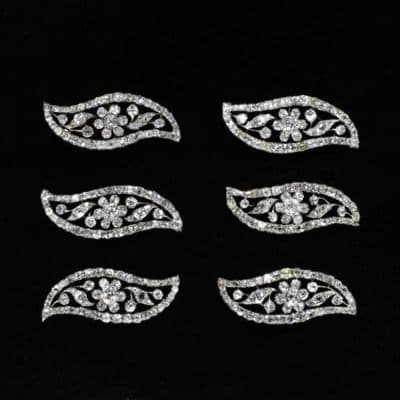
These diamond-crusted shuttles and the engraved pattern share the Rococo's obsession with nature tamed into perfect symmetry—each leaf curl and flower head locked into place like clockwork. The Russian ornaments, meant to glitter down a court stomacher, translate the German engraver's botanical fantasies into three-dimensional sparkle, proving that eighteenth-century luxury was really about making nature more nature-like than nature itself.
Worn with·staysFunction·court-formalMotif·spiral-scroll
SHARED60 years · cross-culture · cross-category
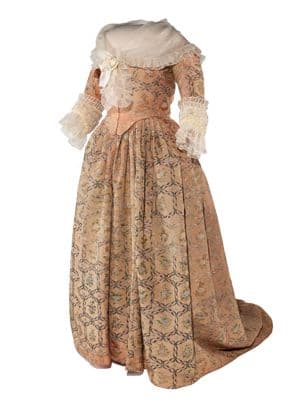
Martha Washington's coral silk gown and this German pattern book speak the same decorative language—both deploy those sinuous rococo scrolls that curl around stylized blooms like musical notation made textile. The engraving's meticulous spirals and rosettes could have been lifted directly from Washington's brocade, where similar motifs wind across the silk in that characteristic 18th-century horror vacui that demanded every inch be ornamented.
Pull the Thread→
Follow this garment wherever the graph leads