Neoclassical Transition · 1770s · Scottish
Production
handmade
Material
ribbed silk
Culture
Scottish
Influences
sack-back construction · Rococo court dress
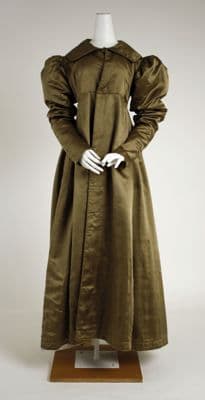
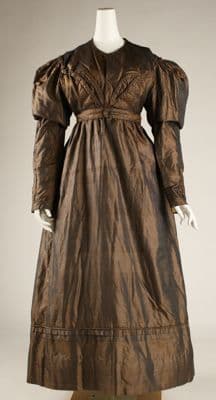
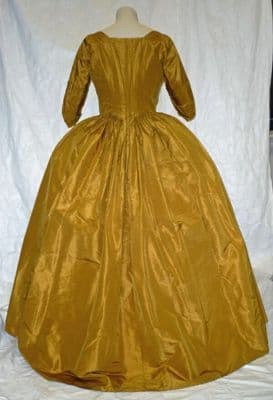
This golden yellow ribbed silk gown displays the characteristic silhouette of the 1770s with a fitted bodice featuring three-quarter sleeves and a dramatically full skirt that extends into a train. The ribbed silk fabric creates subtle vertical texture lines across the entire garment. The bodice appears to be constructed with front-lacing or pinning closure, typical of the period's fitted construction. The skirt's voluminous shape suggests support from side panniers or hip pads beneath. The gown shows evidence of later alterations, particularly visible in the sleeve construction and possibly the skirt length. The rich golden color and quality silk indicate this was a high-status garment for formal occasions during the transitional period between Rococo excess and emerging neoclassical restraint.
Follow this garment wherever the graph leads
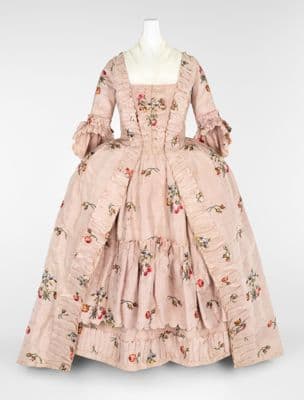
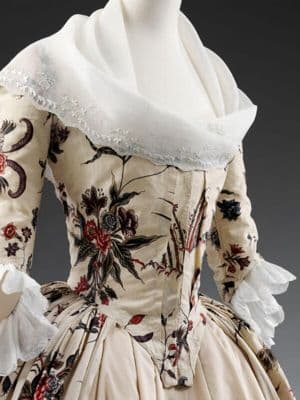
These two gowns reveal how the sack-back silhouette evolved from Rococo excess to neoclassical restraint within a generation. The earlier pink taffeta revels in its floral embroidery and elaborate pleating—notice how the fabric's surface decoration competes with the architectural folds cascading from the shoulders.
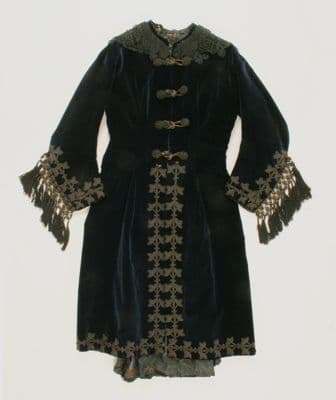
These two gowns reveal how 18th-century formality evolved from theatrical excess to studied restraint. The earlier green velvet robe drowns in its own ornamentation—those cascading gold braids and elaborate cuff treatments announce wealth with the subtlety of a trumpet fanfare, while the later yellow silk gown achieves its authority through sheer architectural precision, that clean-lined bodice and voluminous skirt creating drama through proportion rather than decoration.
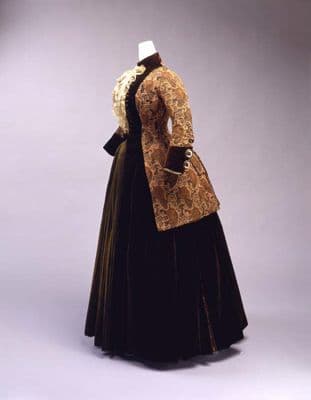
These gowns reveal how 18th-century formality could pivot from ornamental excess to streamlined elegance within a single decade. The earlier brocade ensemble layers pattern upon pattern—metallic threads catching light across that fitted jacket's elaborate weave—while the Scottish sack-back gown strips away surface decoration, letting the golden silk's ribbed texture and the garment's architectural pleating do the talking.
The golden sack-back gown's severe geometry and that lustrous ribbed silk mark fashion's pivot toward neoclassical restraint, while the floral-embroidered sleeves belong to rococo's last gasp of decorative excess. What connects them across a mere decade is the shared architecture of 18th-century dress—both require the same foundation of stays and chemise, the same ritualized process of being laced and pinned into place.