THE MET
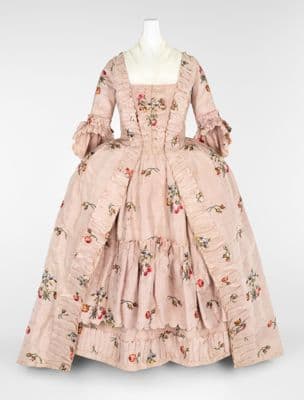
Pale Pink Silk Taffeta Robe à la Française
Rococo · 1750s · British
Production
handmade
Material
silk taffeta
Culture
British
Influences
French court fashion · Watteau pleats
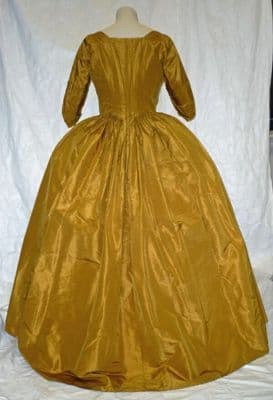
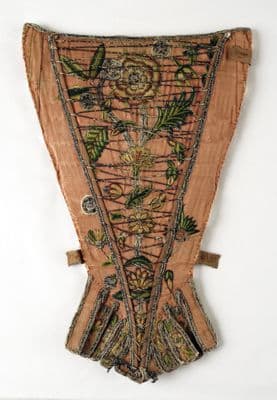
This robe à la française displays the characteristic silhouette of mid-18th century formal dress with a fitted bodice, square neckline, and flowing back pleats that cascade from the shoulders. The pale pink silk is decorated with delicate floral sprigs in naturalistic colors. The sleeves feature multiple tiers of ruffled engageantes at the elbow, typical of Rococo fashion. The bodice appears to be front-lacing with decorative stomacher treatment. The skirt extends over side panniers, creating the wide, bell-shaped silhouette essential to the period. The textile shows scattered botanical motifs including roses and other garden flowers, reflecting the era's fascination with nature and pastoral themes.
dressfit and flaresquare necklinefloor length
Connected To
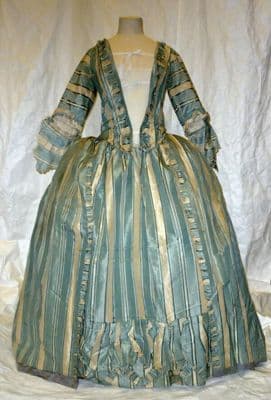
Influences·French court fashionWorn with·chemiseWorn with·staysFunction·
Echoes Across Time
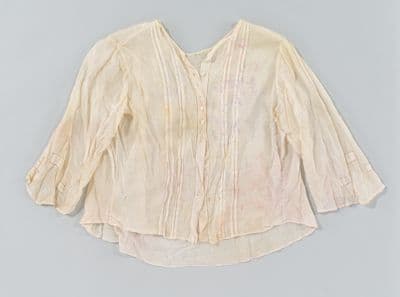
Rococo → Empire / Regency · 50yr57%
SHARED
These two garments share an obsession with delicate surface decoration, but reveal how embellishment travels between worlds. The 18th-century robe's scattered floral sprigs—those tiny painted roses dotting the pink silk like confetti—find their echo in the cotton blouse's precise cutwork embroidery, where negative space becomes ornament through painstaking needlework.
Worn with·chemiseWorn with·staysTechnique·hand-embroidery
Pull the Thread→
Follow this garment wherever the graph leads