Rococo · 1770s · English
Production
handmade
Material
silk taffeta
Culture
English
Influences
French court fashion · sack-back construction
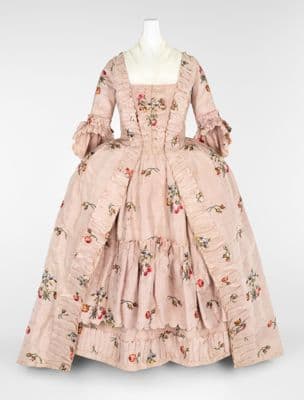
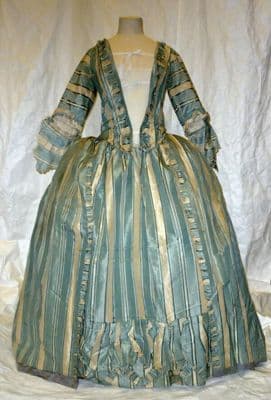
This English sack-back gown displays the characteristic Rococo silhouette with a fitted bodice that extends into deep box pleats cascading from the shoulders to create the distinctive watteau back. The silk taffeta features alternating stripes in blue and cream with subtle pale green accents. The bodice opens at center front to reveal a matching stomacher, typical of 1770s construction. Three-quarter sleeves end in ruffled cuffs with self-fabric trim. The skirt maintains considerable width through pleating rather than panniers, suggesting this represents the transitioning silhouette of the mid-1770s. Decorative trim follows the bodice edges and sleeve openings, emphasizing the garment's structured lines while the striped pattern creates vertical emphasis.


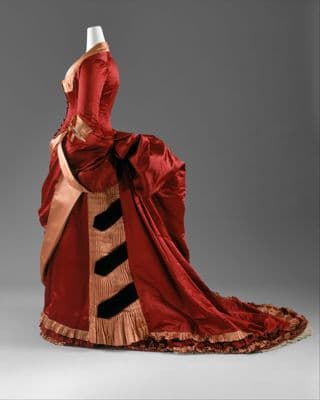
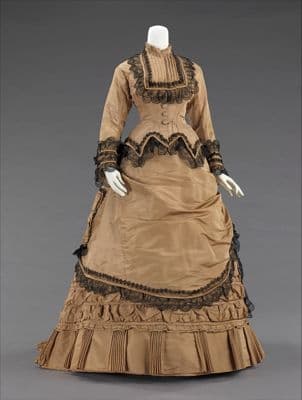
The burgundy bustle gown's geometric black velvet bands slicing across its pleated underskirt echo the methodical ribbon trim that defines every seam and edge of the blue striped sack-back gown — both dresses using contrasting elements as architectural punctuation rather than mere decoration.

Follow this garment wherever the graph leads
These two English gowns reveal how the robe à la française became the century's most influential silhouette, spreading from Versailles across Europe with remarkable consistency. The pink gown's delicate floral sprigs and the blue's bold vertical stripes show the same architectural DNA: that distinctive pleated back cascading from the shoulders, sleeves with layered ruffles at the elbow, and the square neckline that defined aristocratic femininity.
The burgundy bustle gown's geometric black velvet bands slicing across its pleated underskirt echo the methodical ribbon trim that defines every seam and edge of the blue striped sack-back gown — both dresses using contrasting elements as architectural punctuation rather than mere decoration.
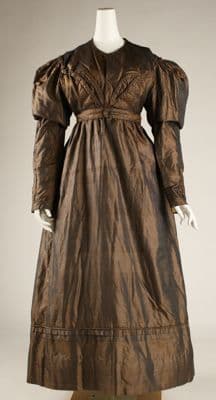
These two silk taffeta gowns span the shift from Rococo excess to Romantic restraint, yet both deploy the same lustrous fabric as armor against ordinariness.
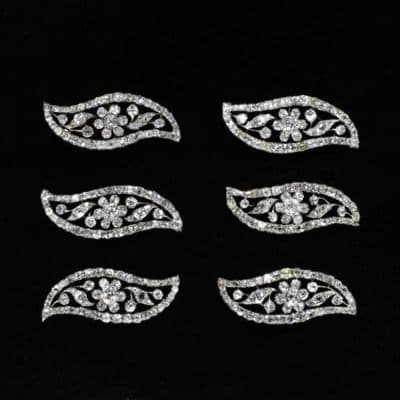
These diamond shuttle ornaments would have glittered against the very kind of silk-striped stomacher that anchors this English sack-back gown — both artifacts of the Rococo's obsession with surface play and optical tricks. The ornaments' paisley-like curves echo the gown's serpentine trim that snakes along every seam, while their brilliant-cut diamonds would have caught light just as the silk taffeta's alternating matte and lustrous stripes create their own shimmer.

These two silk taffeta gowns span the shift from Rococo excess to Romantic restraint, yet both deploy the same lustrous fabric as armor against ordinariness.