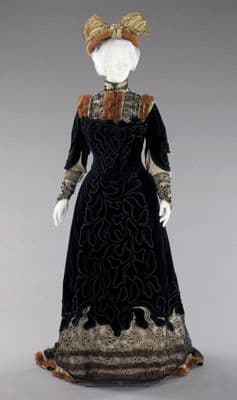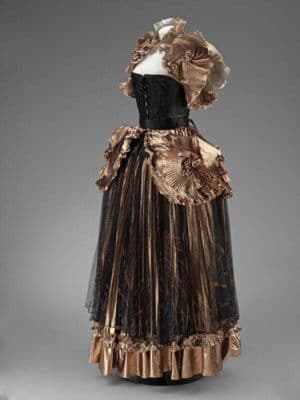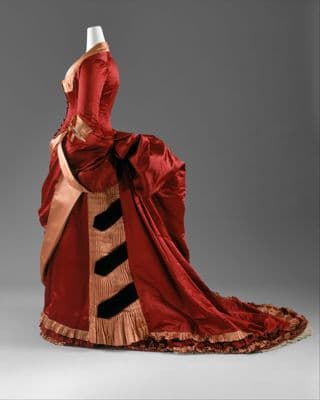
Victorian Late / Bustle · 1880s · American
Production
handmade
Material
silk taffeta
Culture
American
Influences
French Second Empire fashion · bustle cage understructure
This elaborate dinner dress exemplifies 1880s bustle fashion with its dramatic silhouette and rich textile combinations. The fitted bodice features long sleeves and a high neckline typical of the period's modesty requirements. The skirt displays the characteristic bustle projection, creating an exaggerated posterior silhouette that was fashionable during this era. The dress combines burgundy silk taffeta as the primary fabric with coral pink silk panels and black velvet ribbon trim arranged in geometric patterns. The skirt features multiple tiers and ruffles, with the train extending dramatically behind. Surface embellishments include intricate pleating, ribbon work, and what appears to be fringe or tassel details along the hem, demonstrating the period's preference for elaborate ornamentation and mixed-media construction techniques.


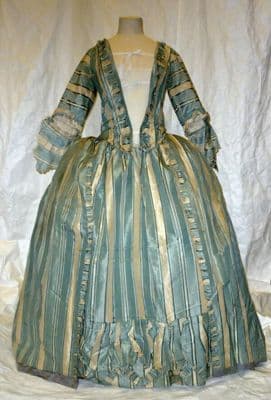
The burgundy bustle gown's geometric black velvet bands slicing across its pleated underskirt echo the methodical ribbon trim that defines every seam and edge of the blue striped sack-back gown — both dresses using contrasting elements as architectural punctuation rather than mere decoration.

Follow this garment wherever the graph leads
Both dresses worship at the altar of the bustle, but they speak different dialects of Victorian drama. The black velvet number plays aristocratic restraint—its surface ripples with subtle texture while gold braid whispers rather than shouts along the hem and bodice. The burgundy silk, meanwhile, goes full theatrical with its aggressive pleating, geometric black velvet appliqués slashing across the skirt like lightning bolts, and that defiant train that refuses to apologize for taking up space.
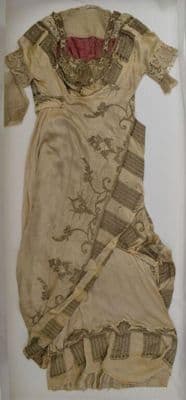
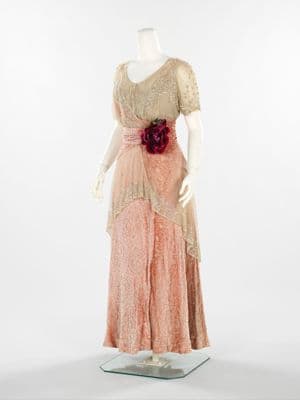
The burgundy bustle gown's architectural drama—that sculptural rear projection and knife-sharp pleating—gives way to the Belle Époque dress's softer seductions: cascading chiffon tiers that whisper where the earlier dress proclaimed. Both demand the same rigorous foundation garments, but where the 1870s silhouette carved space with geometric precision, the 1900s version melts downward in romantic pools, trading Victorian engineering for Edwardian poetry.
The burgundy bustle gown's geometric black velvet bands slicing across its pleated underskirt echo the methodical ribbon trim that defines every seam and edge of the blue striped sack-back gown — both dresses using contrasting elements as architectural punctuation rather than mere decoration.
The burgundy bustle dress's architectural drama of pleated silk and black velvet bows speaks the same language as the pale gold satin's sinuous draping and metallic embroidery — both are exercises in controlled excess, where fabric becomes sculpture through precise manipulation.

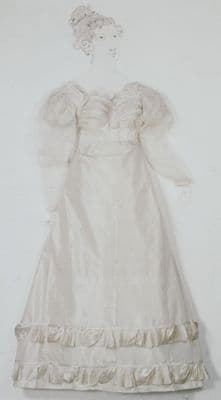
The burgundy bustle gown's dramatic rear cascade and the white Empire dress's high-waisted sweep represent two peaks of feminine silhouette manipulation, separated by sixty years and a revolution in how women's bodies were architecturally reimagined.