V&A
Pale Gold Satin Afternoon Dress with Gilt Embroidery
Edwardian · 1900s · French
Production
haute couture
Material
silk satin
Culture
French
Movement
Art Nouveau
Influences
Empire waistline revival · Art Nouveau botanical motifs
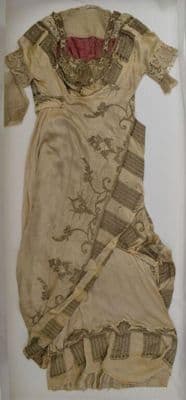
This Edwardian afternoon dress displays the characteristic high-waisted empire silhouette popular in the late 1900s. The pale gold silk satin foundation is elaborately decorated with embroidered botanical motifs executed in silk and silver-gilt threads. The embroidery features flowing vine patterns and stylized floral elements that cascade asymmetrically across the skirt. The bodice shows a square neckline with gathered fabric detail and short sleeves. Sage green and burgundy silk trim creates geometric banding that emphasizes the dress's vertical lines. The construction demonstrates the period's move away from the corseted S-curve silhouette toward the straighter, more natural waistline that would define the 1910s.
dressfit and flaresquare necklinefloor length
Connected To
65%
Influences·Empire waistline revival
SHARED60 years · cross-culture
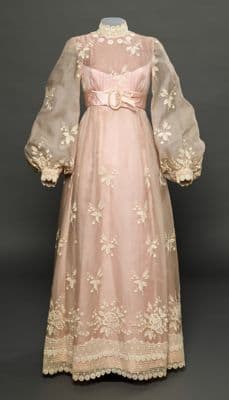
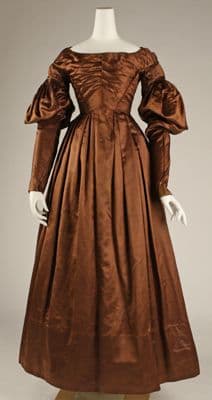
These two gowns speak the same visual language of romantic excess, separated by decades but united in their devotion to surface embellishment as seduction. The earlier dusty rose confection uses delicate floral appliqués scattered like fallen petals across silk taffeta, while the later Edwardian dress deploys heavier gilt embroidery in sinuous Art Nouveau curves that seem to grow organically across the pale satin.
Echoes Across Time
Romantic → Edwardian · 60yr65%
SHARED
These two gowns speak the same visual language of romantic excess, separated by decades but united in their devotion to surface embellishment as seduction. The earlier dusty rose confection uses delicate floral appliqués scattered like fallen petals across silk taffeta, while the later Edwardian dress deploys heavier gilt embroidery in sinuous Art Nouveau curves that seem to grow organically across the pale satin.
Influences·Empire waistline revival
Romantic → Edwardian
Pull the Thread→
Follow this garment wherever the graph leads