Romantic · 1830s · American
Production
handmade
Material
silk taffeta
Culture
American
Influences
1830s romantic silhouette · off-shoulder neckline fashion
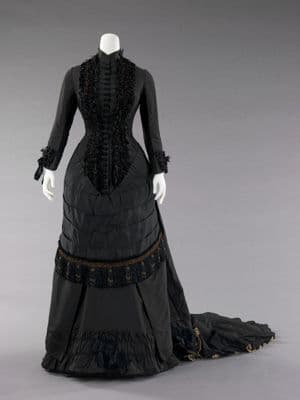
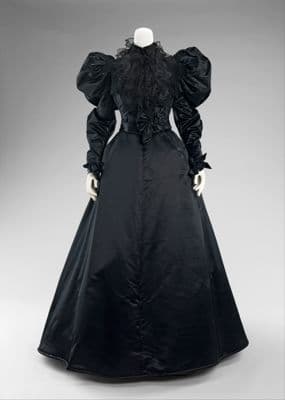
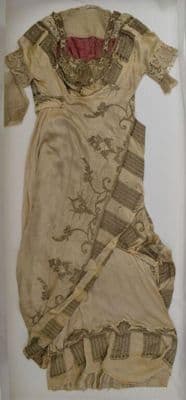
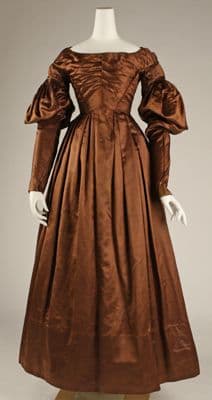
This 1830s romantic gown exemplifies the period's characteristic silhouette with its dramatically fitted bodice and voluminous skirt. The bronze silk taffeta creates lustrous surface reflections typical of formal evening wear. The bodice features an off-shoulder neckline with wide, gathered sleeves that taper to fitted cuffs, creating the fashionable sloped shoulder line. The waistline sits at the natural waist with a fitted bodice that would require corseting. The skirt extends in generous folds to floor length, supported by multiple petticoats. The rich brown taffeta demonstrates the period's preference for jewel-toned silks in formal wear, while the construction shows typical romantic-era emphasis on feminine curves through contrast between tight bodice and full skirt.


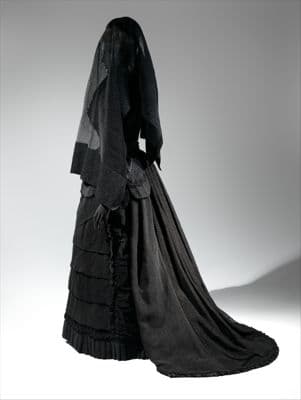
These two gowns speak the same aristocratic language in silk taffeta, separated by roughly a century but united by their understanding of how fabric can create drama. The Victorian black dress deploys taffeta's natural stiffness architecturally—those cascading ruffles and geometric trim work like structural elements, while the later bronze gown lets the same fabric's lustrous weight create a more fluid silhouette through those dramatically puffed sleeves and sweeping skirt.
Follow this garment wherever the graph leads
These two gowns speak the same aristocratic language in silk taffeta, separated by roughly a century but united by their understanding of how fabric can create drama. The Victorian black dress deploys taffeta's natural stiffness architecturally—those cascading ruffles and geometric trim work like structural elements, while the later bronze gown lets the same fabric's lustrous weight create a more fluid silhouette through those dramatically puffed sleeves and sweeping skirt.
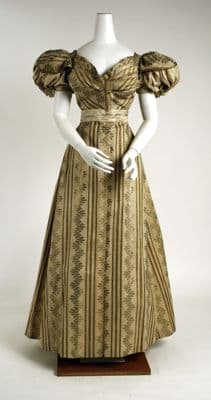
These two gowns speak the same language of theatrical femininity, separated by decades but united in their devotion to the sculptural sleeve. The Victorian olive brocade deploys those enormous puffed sleeves like architectural statements, while the bronze taffeta's sleeves billow with equal drama but softer intention—both understanding that a woman's entrance should announce itself from across a ballroom.
These two gowns speak the same language of silk taffeta grandeur, but with a century's worth of evolution between their theatrical gestures. The black 1890s dress commands attention through sheer architectural excess—those leg-of-mutton sleeves ballooning like dark storm clouds, the fitted bodice corseted into an hourglass that would make a wasp envious, all cascading into yards of rustling fabric that announced a woman's entrance from three rooms away.
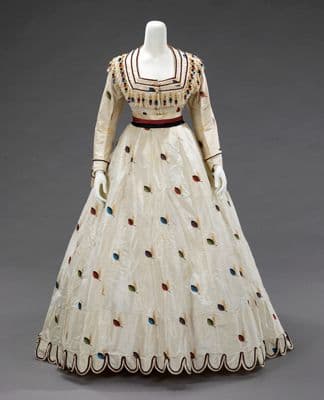
The cream silk gown's scattered jewel-tone embroidered motifs and geometric neckline trim speak the same decorative language as the bronze taffeta's lustrous surface treatment, but where the earlier Empire dress lets ornament float freely across its columnar silhouette, the 1830s gown concentrates all its drama in the sculptural volume of those enormous puffed sleeves.


These two gowns speak the same language of theatrical femininity, separated by decades but united in their devotion to the sculptural sleeve. The Victorian olive brocade deploys those enormous puffed sleeves like architectural statements, while the bronze taffeta's sleeves billow with equal drama but softer intention—both understanding that a woman's entrance should announce itself from across a ballroom.