THE MET
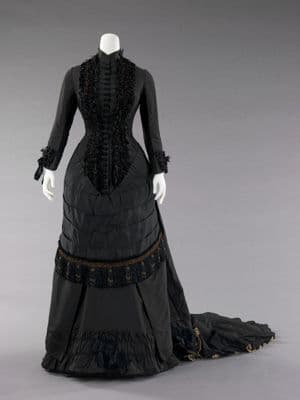
Black Silk Taffeta Bustle Dinner Dress
Victorian Late / Bustle · 1880s · Spanish
Production
handmade
Material
silk taffeta
Culture
Spanish
Influences
French Second Empire court dress · bustle construction techniques
This formal dinner dress exemplifies 1880s bustle silhouette with a tightly fitted bodice extending into a long pointed waist. The black silk taffeta features elaborate trim work creating geometric patterns across the front panel and skirt tiers. The high neckline is adorned with ruched fabric forming a decorative collar. Long fitted sleeves end in small cuffs at the wrists. The skirt extends into a dramatic train with multiple horizontal bands of trim creating visual weight at the hem. The construction shows typical Victorian engineering with the fitted bodice requiring corseting underneath and the skirt's projection suggesting a bustle framework. The dark coloration and rich surface ornamentation reflect the period's preference for substantial, heavily decorated formal wear.
dresstrumpethigh neckfloor length
Connected To
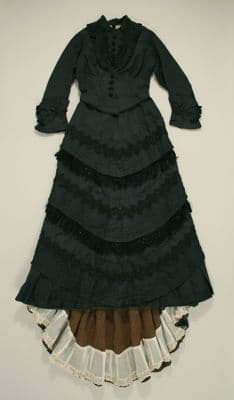
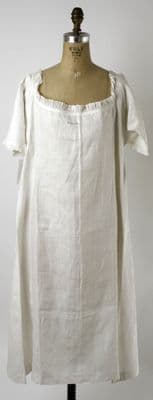
Worn with·bustle padWorn with·chemiseWorn with·corset
Echoes Across Time
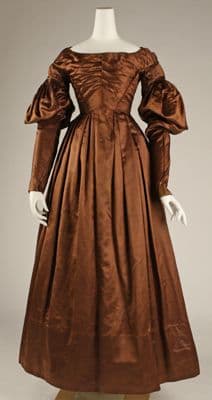
Victorian Late / Bustle → Romantic · 50yr62%
SHARED
These two gowns speak the same aristocratic language in silk taffeta, separated by roughly a century but united by their understanding of how fabric can create drama. The Victorian black dress deploys taffeta's natural stiffness architecturally—those cascading ruffles and geometric trim work like structural elements, while the later bronze gown lets the same fabric's lustrous weight create a more fluid silhouette through those dramatically puffed sleeves and sweeping skirt.
Worn with·chemiseWorn with·corsetWorn with·petticoat
Pull the Thread→
Follow this garment wherever the graph leads