THE MET
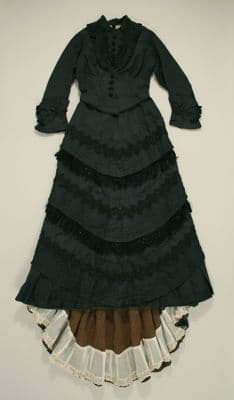
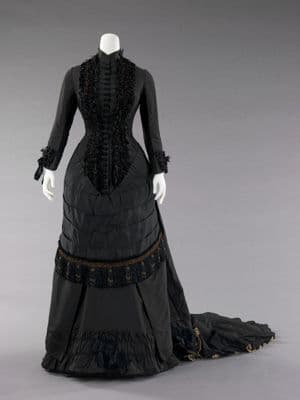
Forest Green Silk Bustle Day Dress
Victorian Late / Bustle · 1870s · American
Production
handmade
Material
silk
Culture
American
Influences
1870s bustle silhouette · tiered ruffled construction
This forest green silk dress exemplifies 1870s bustle fashion with its characteristic silhouette featuring a fitted, high-necked bodice and dramatically tiered skirt. The bodice has long sleeves with gathered cuffs and appears to button up the front. The skirt displays the period's signature construction with multiple horizontal tiers of fabric creating cascading ruffles that emphasize the bustle projection at the back. The hem reveals a contrasting brown and cream striped underskirt or petticoat, typical of the era's layered approach to dress. The silk appears to have a subtle pattern or texture, and the overall construction demonstrates the period's emphasis on structured tailoring combined with decorative surface treatment through the tiered ruffles.
dressfit and flarehigh neckfloor length
Connected To
Worn with·bustle padWorn with·chemiseWorn with·corsetWorn with·
Echoes Across Time
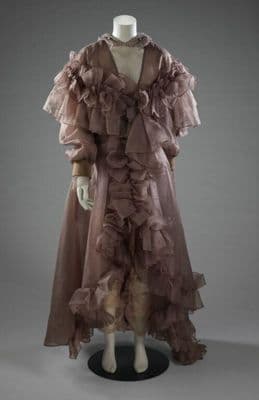
Victorian Late / Bustle → Romantic · 40yr58%
SHARED
The Victorian bustle dress and the romantic evening gown are separated by decades but united by their obsession with cascading horizontal ruffles that transform the female silhouette into pure architectural drama. Where the earlier dress uses precise, knife-sharp pleated tiers in forest green silk to create the period's signature shelf-like bustle projection, the later gown softens the concept into flowing chiffon ruffles that spiral around the body like rose petals caught in motion.
Worn with·chemiseWorn with·corsetWorn with·petticoat
Pull the Thread→
Follow this garment wherever the graph leads