V&A
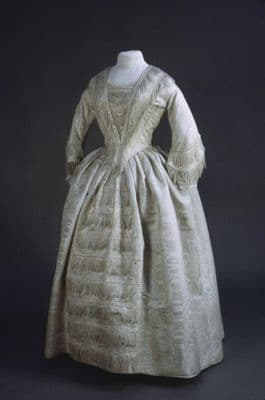
Ivory Satin Wedding Gown with Organza Overlay
Edwardian · 1900s · British
Designer
Sarah Fullerton Monteith Young
Production
haute couture
Material
silk satin with crystalline organza overlay
Culture
British
Influences
Belle Époque embroidery traditions · S-curve corsetry silhouette
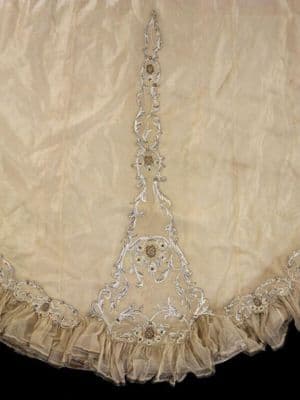
This Edwardian wedding gown displays the characteristic S-curve silhouette of the early 1900s with a fitted bodice that extends into a long trained skirt. The dress features elaborate white-on-white embroidered decoration in scrolling vine and floral motifs across the bodice front and extending down the skirt. The crystalline organza overlay creates dimensional texture over the silk satin foundation. The skirt hem is finished with a delicate pleated ruffle trim. The embroidery work shows exceptional craftsmanship typical of high-end London dressmaking, with raised threadwork creating relief patterns. The overall construction demonstrates the period's emphasis on refined luxury and technical skill in bridal couture.
dressa-linefloor length
Connected To
Worn with·corsetWorn with·petticoatTechnique·couture-construction
Echoes Across Time
2000s → Edwardian · 100yr67%
SHARED
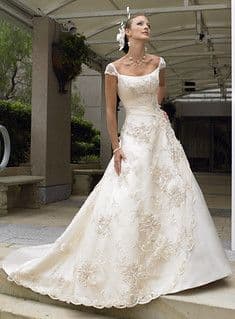
The Edwardian gown's intricate cutwork embroidery and ruffled hem find their echo a century later in the modern ballgown's scattered floral appliqués, both using negative space and dimensional texture to create movement across ivory silk. Where the 1900s dress builds drama through tiered construction and elaborate handwork that speaks to an era of domestic craftsmanship, the 2000s version achieves its presence through sheer volume and strategic placement of three-dimensional blooms.
Worn with·corsetWorn with·petticoatTechnique·couture-construction
Pull the Thread→
Follow this garment wherever the graph leads