THE MET
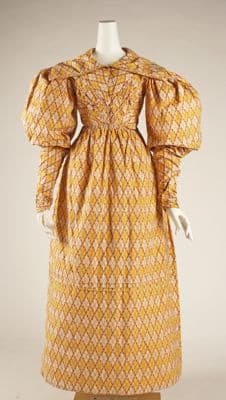
Golden Yellow Cotton Fit and Flare Day Dress
Romantic · 1820s · British
Production
handmade
Material
cotton
Culture
British
Influences
Empire high waistline · gigot sleeve construction
This 1820s romantic dress exemplifies the period's dramatic sleeve silhouette with extraordinarily voluminous gigot sleeves that extend from shoulder to elbow before tapering to fitted cuffs. The bodice is closely fitted through the torso with a high neckline and decorative trim at the collar. The geometric diamond pattern in golden yellow and white creates visual texture across the entire garment. The skirt falls in straight, columnar lines from a high waistline, typical of the transitional period between Empire and full Romantic styling. The sleeve construction would have required internal support structures to maintain their exaggerated shape, representing the era's fascination with architectural silhouettes that emphasized the contrast between tiny waists and massive sleeve volume.
dressfit and flarehigh neckfloor length
Connected To
Worn with·chemiseWorn with·corsetWorn with·petticoat
Echoes Across Time
Romantic → Victorian Late / Bustle · 60yr61%
SHARED
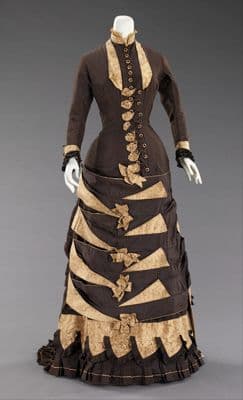
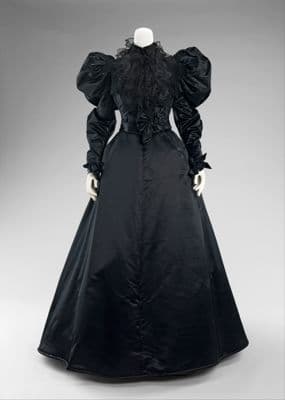
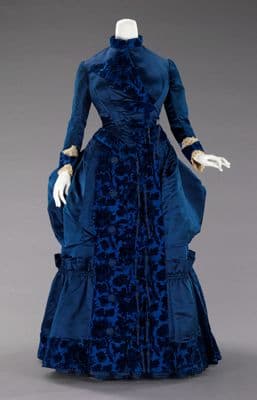
These two dresses reveal how Victorian women's daywear evolved from theatrical volume to architectural precision across six decades. The earlier golden dress deploys its massive gigot sleeves like fabric balloons, creating drama through sheer scale and that busy diamond brocade that catches light with every gesture, while the navy velvet number channels all its ambition downward into that cascading bustle train, using rich texture and precise pleating instead of pattern to command attention.
Worn with·chemiseWorn with·corsetWorn with·petticoat
Pull the Thread→
Follow this garment wherever the graph leads