THE MET
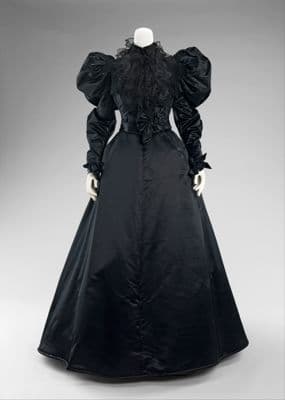
Black Silk Taffeta Dinner Dress with Leg-of-Mutton Sleeves
Fin de Siecle / Gibson Girl · 1890s · American
Production
handmade
Material
silk taffeta
Culture
American
Influences
1890s leg-of-mutton sleeve · Victorian corseted silhouette
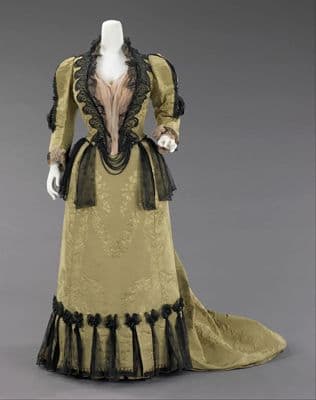
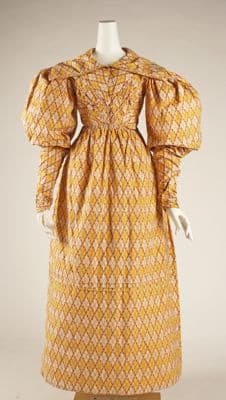
This black silk taffeta dinner dress exemplifies 1890s formal evening wear with its dramatic leg-of-mutton sleeves that balloon enormously at the shoulders before tapering to fitted cuffs at the wrists. The high neckline features elaborate ruching and gathering that creates textural interest across the throat and chest. The bodice is severely fitted through the waist, requiring corseting to achieve the period's ideal silhouette. Multiple rows of decorative buttons march down the center front, serving both functional and ornamental purposes. The skirt extends in a full A-line shape to the floor, constructed with sufficient fabric to create graceful movement while maintaining the era's preference for substantial, weighty garments that conveyed respectability and social status.
dressfit and flarehigh neckfloor length
Connected To
69%
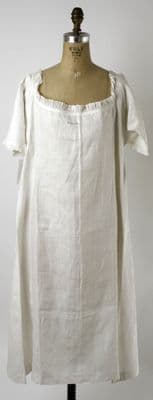
Worn with·bustle padWorn with·chemiseWorn with·corset
Echoes Across Time
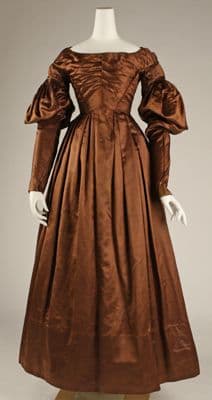
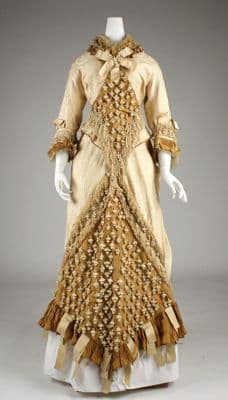
Fin de Siecle / Gibson Girl → Romantic · 60yr62%
SHARED
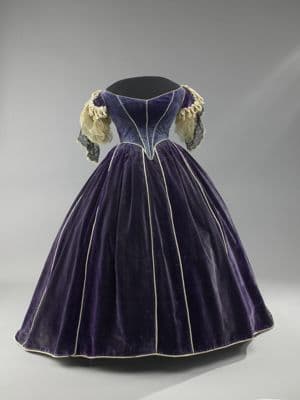
These two gowns speak the same language of silk taffeta grandeur, but with a century's worth of evolution between their theatrical gestures. The black 1890s dress commands attention through sheer architectural excess—those leg-of-mutton sleeves ballooning like dark storm clouds, the fitted bodice corseted into an hourglass that would make a wasp envious, all cascading into yards of rustling fabric that announced a woman's entrance from three rooms away.
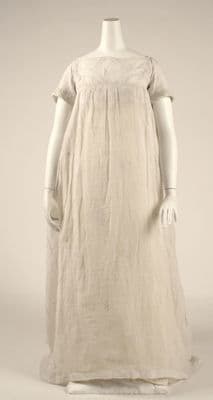
Worn with·chemiseWorn with·corsetWorn with·petticoat
Pull the Thread→
Follow this garment wherever the graph leads