THE MET
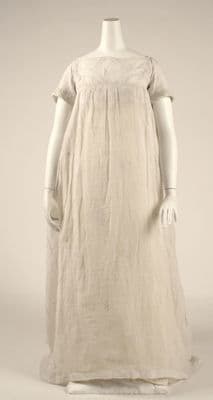
White Cotton Muslin Empire Waist Day Dress
Empire / Regency · 1800s-1810s · British
Production
handmade
Material
cotton muslin
Culture
British
Influences
neoclassical Greek chiton · French Empire court fashion
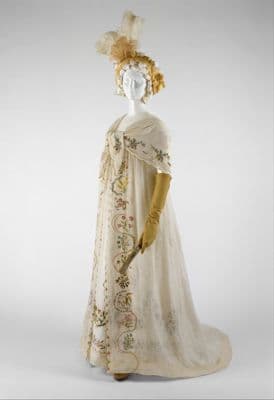
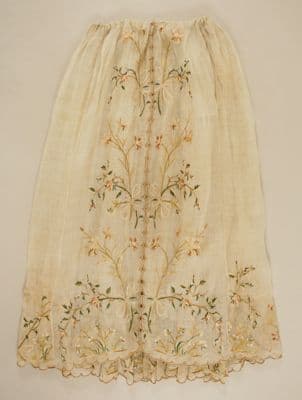
A white cotton muslin dress exemplifying Empire period silhouette with characteristic high waistline positioned just below the bust. The bodice features a square neckline with gathered fabric creating soft fullness across the chest. Short puffed sleeves are set into the armholes with gentle gathering. The skirt falls in straight, columnar lines from the raised waistline to floor length, creating the neoclassical silhouette popular during the Regency era. The lightweight muslin fabric allows for natural draping and movement. Fine pintucks or gathering details are visible at the neckline and waist seam. The overall construction demonstrates the period's preference for simple, unstructured garments that emphasized natural body lines over artificial shaping.
dressa-lineround neckfloor length
Connected To
Influences·neoclassical Greek chitonWorn with·chemiseWorn with·stays or corset
SHAREDsame era · cross-culture
Pull the Thread→
Follow this garment wherever the graph leads