Empire / Regency · 1810s · American or European
Production
handmade
Material
silk muslin
Culture
American or European
Movement
Neoclassicism
Influences
neoclassical Greek chiton · Josephine Bonaparte court style
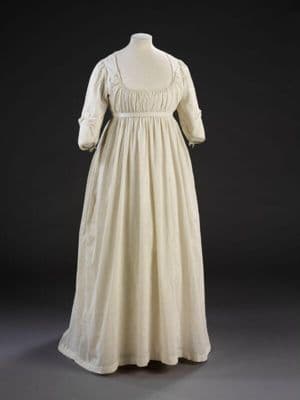
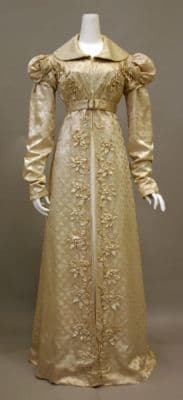
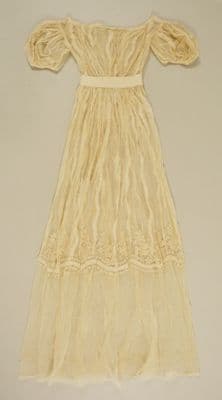
This Empire-style wedding gown features the characteristic high waistline positioned just below the bust, creating the neoclassical silhouette popular during the Regency period. The bodice has gathered short puff sleeves and a fitted torso that extends into a long, flowing skirt. The lightweight muslin fabric drapes naturally from the high waist to create an elongated, columnar silhouette. Delicate embroidered or lace trim adorns the hem, adding subtle decorative detail typical of the period's restrained aesthetic. The cream-colored fabric and simple construction reflect the neoclassical influence on early 19th-century fashion, emphasizing natural form over artificial shaping.
Follow this garment wherever the graph leads
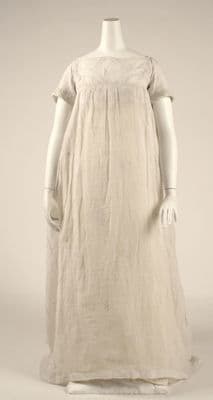
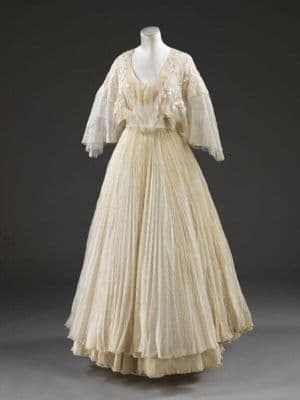
These two gowns speak the same neoclassical language, but with different accents—the silk muslin wedding dress whispers luxury with its delicate puff sleeves and lace trim, while the cotton day dress states its practicality in clean, unadorned lines. Both anchor their empire waists just beneath the bust in perfect Regency fashion, letting yards of pale fabric fall in Grecian columns that Jane Austen would recognize instantly.
These two gowns reveal how the Empire silhouette's democratic appeal transcended class lines around 1810—the white cotton version with its practical high neckline and minimal trim was everyday elegance, while the cream silk confection with its dramatic off-shoulder sleeves and delicate lace borders announced special occasion luxury.
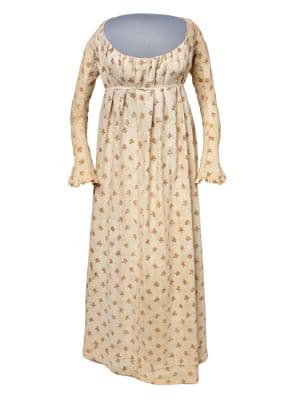
These two gowns reveal how Empire style's neoclassical ideal traveled from silk drawing rooms to cotton everyday life. The wedding dress's lustrous muslin and delicate lace trim speak to formal aspirations, while the day dress's printed cotton and practical long sleeves show how the same high-waisted, columnar silhouette adapted for daily wear.
These two garments reveal how Empire-era fashion could split between ethereal romanticism and regal formality while sharing the same DNA. The wedding gown's gossamer muslin and delicate lace hem whisper of neoclassical ideals—that studied simplicity that made wealthy women look like Greek goddesses—while the redingote's heavy brocade and military-inspired frogging announce status with every golden thread.