Belle Epoque · 1900s · French
Production
haute couture
Material
silk taffeta
Culture
French
Influences
S-curve silhouette · trained skirt fashion
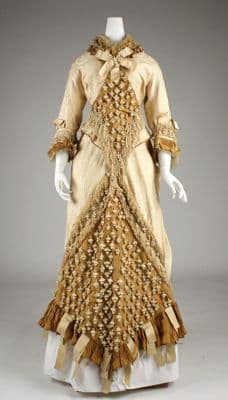
This Belle Époque dress features a cream silk foundation with extensive golden brown trim applied in geometric diamond lattice patterns across the entire skirt front and train. The bodice has a high neckline with bow closure and fitted sleeves ending in decorative cuffs. The trim appears to be silk ribbon or braid arranged in repeating diamond motifs with tasseled fringe details at intervals. The skirt extends into a substantial train, typical of formal daywear from this period. The construction demonstrates the era's preference for elaborate surface decoration and the S-curve silhouette achieved through corseting and structured undergarments.


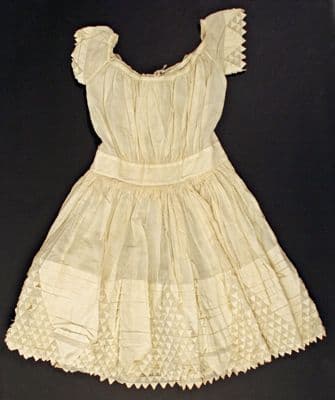
These two cream dresses speak the same language of feminine armor, separated by decades but united in their strategic deployment of texture as seduction. The Belle Époque gown's elaborate golden lattice work cascading down the front transforms the body into a precious object, while the later American dress achieves similar allure through its intricate whitework embroidery and scalloped edges that catch light like the earlier dress's dimensional trim.
Follow this garment wherever the graph leads
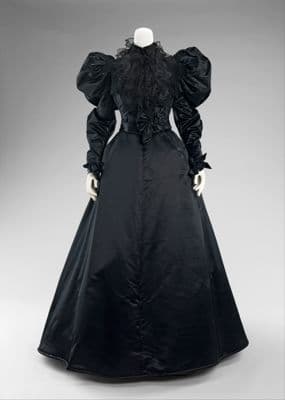
These two silk taffeta gowns from the 1880s and 1890s trace the evolution of Victorian formality from ornamental excess to architectural drama. The earlier cream dress deploys its golden lattice trim like armor across the bodice, each diamond catching light in a calculated display of craftsmanship, while the later black gown abandons surface decoration entirely for the sculptural theater of those balloon sleeves—pure volume as ornament.
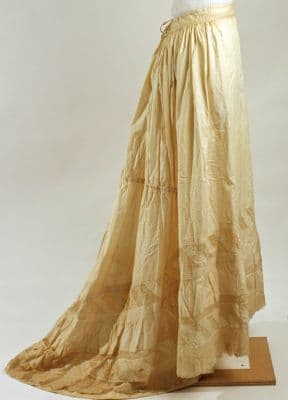
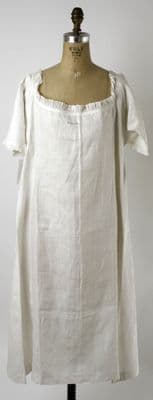
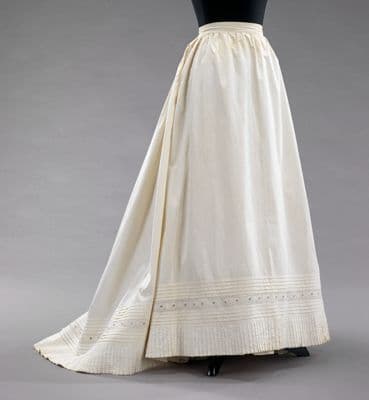
That latticed Belle Époque gown and the crisp cotton petticoat beneath it tell the story of fashion's hidden architecture—one performs while the other supports. The dress's elaborate golden-brown ribbon work cascading down the front in diamond patterns would have been impossible without the structured foundation that petticoat provided, its precise pleating and trained hem creating the perfect silhouette for such theatrical surface decoration.
These two pieces reveal the architecture beneath Belle Époque glamour: the 1870s American cotton petticoat with its carefully engineered tiers and drawstring waist created the foundational silhouette that would support the French silk confection thirty years later.
These two cream dresses speak the same language of feminine armor, separated by decades but united in their strategic deployment of texture as seduction. The Belle Époque gown's elaborate golden lattice work cascading down the front transforms the body into a precious object, while the later American dress achieves similar allure through its intricate whitework embroidery and scalloped edges that catch light like the earlier dress's dimensional trim.


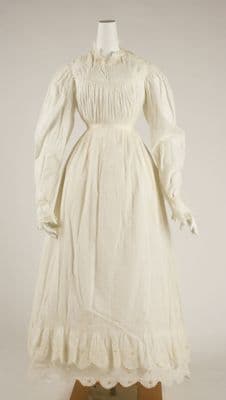
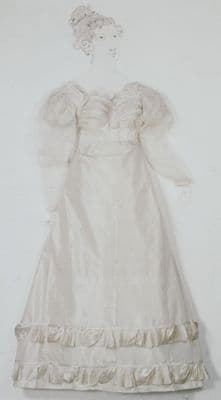
These two cream confections are separated by nearly a century but united by fashion's eternal fascination with controlled excess. The Belle Époque gown transforms its wearer into a gilded monument through that extraordinary lattice of golden brown trim—each diamond catches light like armor made of silk, while the later Romantic dress achieves drama through sheer volume, its billowing sleeves and tiered skirts creating a softer, more ethereal silhouette.