THE MET
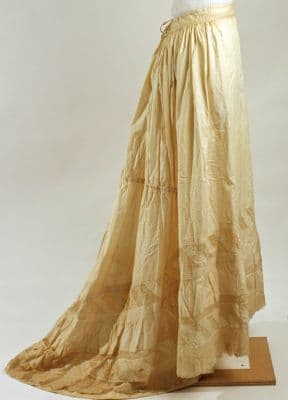
Cream Cotton Bustle Petticoat with A-Line Silhouette
Victorian Late / Bustle · 1870s · American
Production
handmade
Material
cotton
Culture
American
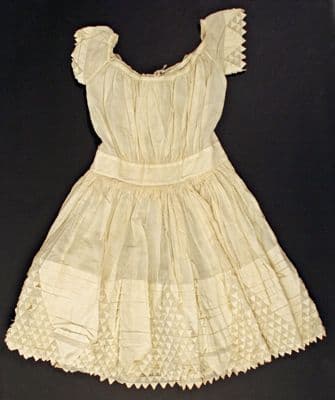
This cream-colored cotton petticoat displays the characteristic silhouette of the late Victorian bustle period. The garment features a fitted waistband that transitions into an extremely full, gathered skirt with substantial train length. The cotton fabric appears to be a plain weave with a slightly crisp hand that would provide the necessary structure to support outer garments. Multiple tiers of gathering create volume throughout the skirt, with the fabric pooling dramatically on the ground behind. The construction shows machine-sewn seams typical of the period's domestic sewing practices. This undergarment would have been essential for achieving the fashionable silhouette of the late 1870s, providing the foundation for the era's characteristic back fullness and train.
dressa-linefloor length
Connected To
61%
Worn with·bustle padWorn with·chemiseWorn with·corset
SHAREDsame era · cross-culture
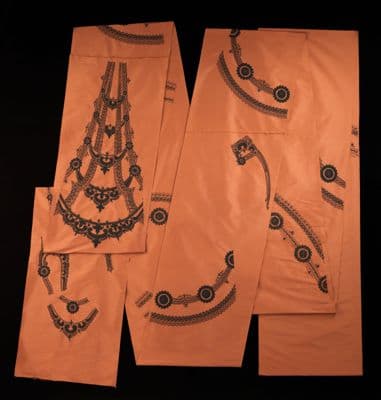
These coral silk pattern pieces map the ornate surface choreography of a French bustle gown—all those printed necklace motifs and decorative chains that would have cascaded down the elaborate drapery—while the cream cotton petticoat beneath reveals the structural engineering that made such theatrical silhouettes possible.
Text62%
Image74%
61%
Worn with·bustle padWorn with·chemiseWorn with·corset
SHARED10 years · cross-culture · cross-category
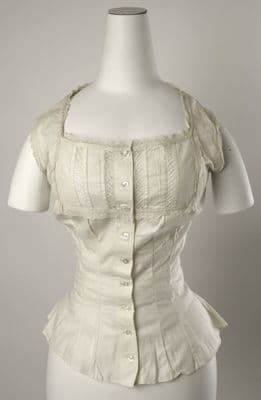
These two pieces reveal the Victorian obsession with architectural undergarments that literally built the female silhouette from the inside out. The corset cover's precise quilted channels and button-front closure mirror the bustle petticoat's engineered tiers and drawstring waistband—both are exercises in structural couture, designed to smooth, lift, and project the body into an impossible hourglass crowned by a shelf-like posterior.
60%
Worn with·bustle padWorn with·chemiseWorn with·corset
SHARED30 years · cross-culture
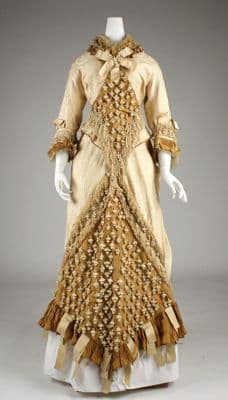
These two pieces reveal the architecture beneath Belle Époque glamour: the 1870s American cotton petticoat with its carefully engineered tiers and drawstring waist created the foundational silhouette that would support the French silk confection thirty years later.
Worn with·bustle padWorn with·chemise
SHARED10 years · cross-culture
Text72%
Pull the Thread→
Follow this garment wherever the graph leads