THE MET
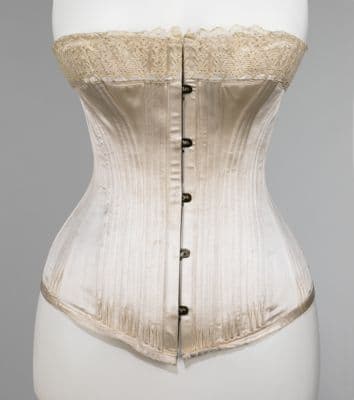
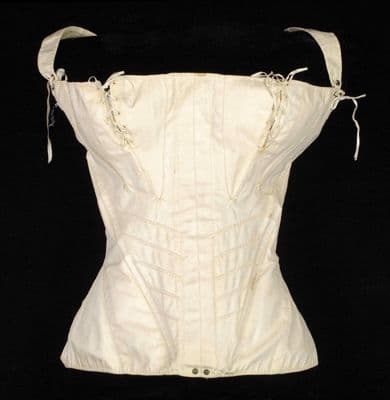
Cream Silk Satin Wasp-Waisted Corset
Victorian Late / Bustle · 1880s · French
Production
handmade
Material
silk satin
Culture
French
Influences
1880s tight-lacing fashion · French corsetry techniques
This cream silk satin corset displays the characteristic extreme wasp-waisted silhouette of the 1880s bustle era. The garment features vertical steel boning channels creating a rigid structure that compresses the waist while supporting the bust and hips. Decorative lace trim adorns the upper edge, and the front closure consists of metal hook-and-eye fastenings running down the center front. The corset extends to hip length with curved seaming that follows the natural body contours while dramatically reducing the waist circumference. The construction shows precise tailoring with reinforced stress points and careful attention to the placement of boning for maximum shaping effect.
dresstight fithip length
Connected To
Worn with·bustle padWorn with·chemiseWorn with·petticoat
SHARED10 years · cross-culture
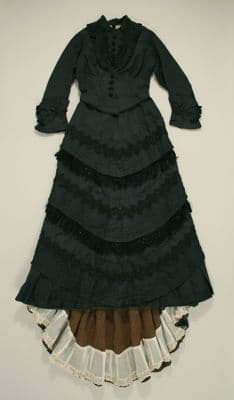
This forest green silk dress with its cascading tiers of ruffles and that cream corset are partners in the Victorian obsession with reshaping the female form into an impossible hourglass. The dress's fitted bodice would have been worn over a corset nearly identical to this one—note how both create that signature wasp waist through ruthless engineering, the corset's steel boning doing the structural work while the dress's strategic ruching and those graduated ruffles amplify the hips.
Worn with·bustle padWorn with·chemiseWorn with·petticoat
SHAREDsame era · cross-culture
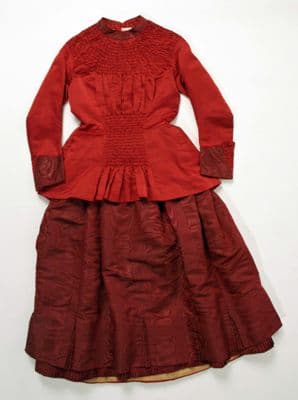
This burgundy silk dress and cream corset are partners in the Victorian obsession with architectural femininity, both engineered to create the period's signature silhouette of impossible waist and exaggerated hips. The corset's bone channels and back lacing work in tandem with the dress's smocked bodice and gathered skirt to sculpt a woman into an hourglass so severe it required structural undergarments just to stand upright.
Worn with·bustle padWorn with·chemiseWorn with·petticoat
SHARED10 years · cross-culture
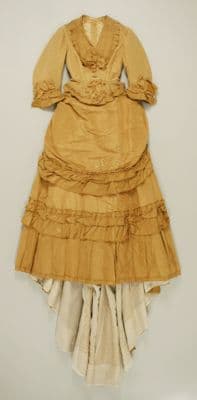
The golden dress's cascading ruffles and gathered bustle train would have been impossible without the corset's brutal 18-inch wasp waist anchoring the silhouette beneath. Both pieces worship the same Victorian obsession with the hourglass figure, but where the corset does the punishing work—note those relentless steel bones and back lacing—the dress gets to play the romantic heroine with its butter-soft taffeta and flirtatious sleeve ruffles.
Worn with·bustle padWorn with·chemiseWorn with·petticoat
SHARED10 years · cross-culture
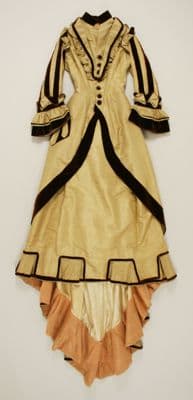
That golden dress with its severe black trim and the cream corset beneath it tell the story of Victorian artifice in its most extreme form — the dress's dramatic bustle silhouette is literally impossible without the corset's wasp waist doing the structural heavy lifting.
Pull the Thread→
Follow this garment wherever the graph leads