THE MET
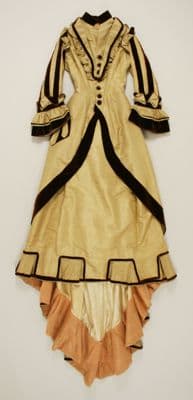
Golden Yellow Silk Taffeta Bustle Dress with Train
Victorian Late / Bustle · 1870s · American
Production
ready-to-wear
Material
silk taffeta
Culture
American
Influences
military uniform braiding · Second Empire court dress
This Victorian bustle dress features a fitted bodice with military-inspired black braiding and decorative buttons arranged in geometric patterns across the golden yellow silk taffeta. The dress displays characteristic 1870s construction with a high neckline, long fitted sleeves, and a dramatic back train that would have been supported by a bustle framework. Black trim outlines the hemline and creates visual weight at the skirt's edge. The peach-colored underskirt or lining is visible beneath the main garment, creating color contrast. The precise tailoring and structured silhouette demonstrate the period's emphasis on architectural dress construction and the fashionable backward projection of the skirt.
dressfit and flarehigh neckfloor length
Connected To
70%
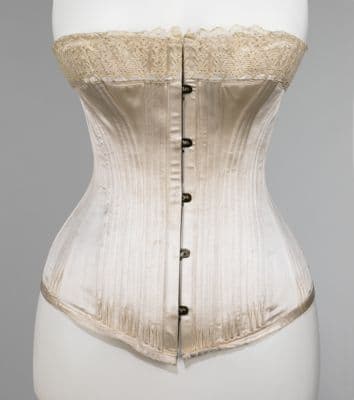
Worn with·bustle padWorn with·chemiseWorn with·corsetWorn with·
Echoes Across Time
Victorian Late / Bustle → 2020s · 150yr70%
SHARED
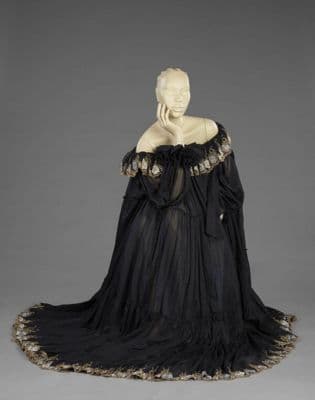
These two gowns speak the same language of theatrical mourning, separated by 150 years but united in their understanding that grief deserves grandeur. The Victorian yellow dress, with its geometric black trim marching along every edge like a funeral procession, transforms what should be a cheerful color into something oddly somber—the black bands reading as mourning borders that contain and formalize the wearer's presence.
Worn with·bustle padWorn with·chemiseWorn with·corset
Pull the Thread→
Follow this garment wherever the graph leads