THE MET
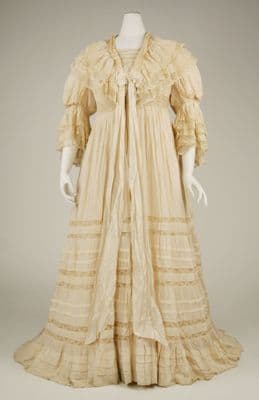
Cream Silk Cotton Morning Dress with Lace
Romantic · 1820s-1830s · American or European
Production
handmade
Material
silk and cotton with lace trim
Culture
American or European
Influences
Empire period high waistline · Romantic era sleeve volume
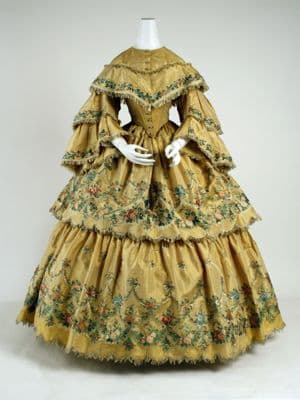
This flowing morning dress features a high empire waistline with extensive gathering that creates a loose, comfortable silhouette extending to floor length. The garment opens at center front and is constructed with multiple tiers of ruffled trim cascading down the skirt in horizontal bands. The sleeves are dramatically gathered and puffed from shoulder to wrist, creating substantial volume. Delicate lace edging trims the neckline, sleeve cuffs, and ruffle tiers throughout. The lightweight silk and cotton construction allows the fabric to drape softly while maintaining the characteristic Romantic era emphasis on feminine volume and decorative surface treatment through layered textile manipulation.
dressa-lineround neckfloor length
Connected To
Worn with·chemiseWorn with·corsetWorn with·petticoat
SHARED45 years · cross-culture
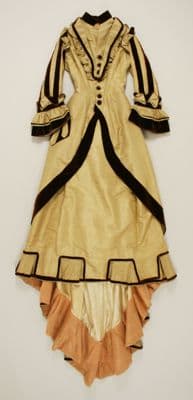
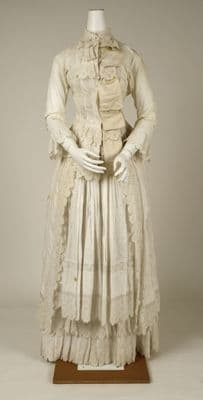
These two cream dresses, separated by nearly half a century, reveal how Victorian women's obsession with vertical manipulation evolved from Romantic fantasy to architectural precision.
Pull the Thread→
Follow this garment wherever the graph leads