THE MET
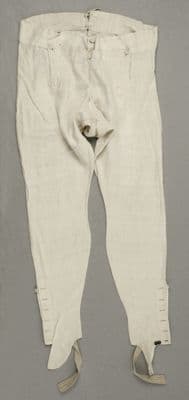
Cream Linen High-Waisted Drawstring Pantaloons
Romantic · 1830s · American
Production
handmade
Material
linen
Culture
American
These cream-colored linen pantaloons feature a high-waisted design with a drawstring closure at the waistband. The legs are cut full through the thigh and taper toward the ankle, ending in fitted bands that tie with ribbon or tape closures. The construction shows hand-sewn seams typical of 1830s undergarments. The lightweight linen fabric would have provided modesty and comfort beneath the full skirts of Romantic era dresses. The ankle ties allowed the garment to be secured snugly against the leg, preventing the fabric from bunching or showing beneath outer garments. This style represents the evolution from earlier open-crotch drawers to closed undergarments that became standard women's underwear.
pantsloose fitfloor length
Connected To
Worn with·chemiseWorn with·corsetWorn with·petticoat
SHARED10 years · cross-culture · cross-category
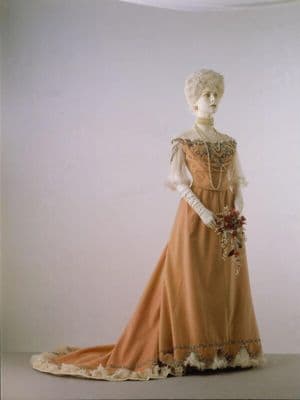
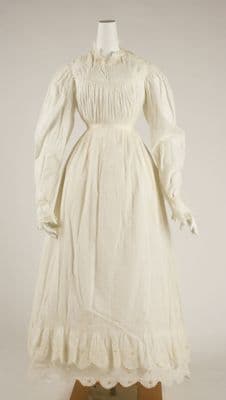
These two garments reveal the Romantic era's obsession with texture as ornament—the dress layers pintucks, ruffles, and scalloped trim like architectural details, while the pantaloons rely on the sculptural drama of their voluminous legs gathered into neat ankle ties.
Text73%
Image80%
Entity
Worn with·chemiseWorn with·corsetWorn with·petticoat
SHARED50 years · cross-category
These cream linen pantaloons and cotton bustle dress reveal how women's undergarments and outer layers evolved in lockstep through the 19th century. The pantaloons' high waistline and drawstring closure echo the empire silhouettes popular when they were worn, while their ankle ties and gathered fullness anticipate the very volume that the later bustle dress would formalize into structured femininity.
Worn with·chemiseWorn with·corsetWorn with·petticoat
SHARED40 years · cross-category
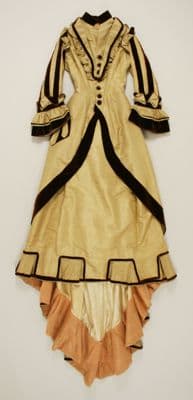
These two garments capture the Victorian woman's relationship with concealment and revelation across four decades of shifting silhouettes. The cream linen drawers, with their practical drawstring waist and ankle ties, represent the hidden foundation that made possible the elaborate spectacle above—notice how their simple functionality contrasts with the golden silk dress's theatrical excess of black velvet trim, cascading train, and structured bustle architecture.
Worn with·chemiseWorn with·corsetWorn with·petticoat
SHARED70 years · cross-culture · cross-category
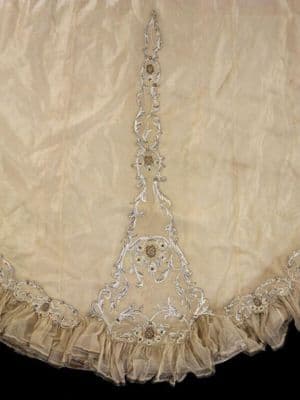
These garments speak to the stubborn persistence of romantic femininity across seven decades of upheaval. The pantaloons' drawstring waist and gathered ankle ties echo the wedding gown's cinched bodice and ruffled hem—both garments sculpt the female form through strategic gathering and release, creating that coveted hourglass even as they conceal the body beneath layers of virtuous fabric.
Echoes Across Time
Romantic → Victorian Late / Bustle · 50yr57%
SHARED
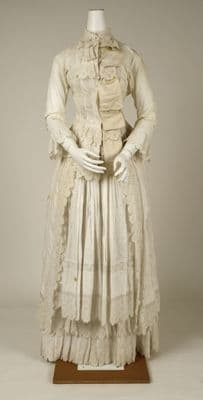
These cream linen pantaloons and cotton bustle dress reveal how women's undergarments and outer layers evolved in lockstep through the 19th century. The pantaloons' high waistline and drawstring closure echo the empire silhouettes popular when they were worn, while their ankle ties and gathered fullness anticipate the very volume that the later bustle dress would formalize into structured femininity.
Worn with·chemiseWorn with·corsetWorn with·petticoat
Pull the Thread→
Follow this garment wherever the graph leads