SMITHSONIAN
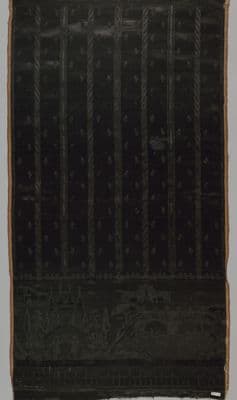
Dark Green Silk Velvet Skirt Panel
Rococo · 1770s · Spanish
Production
artisan-craft
Material
silk velvet
Culture
Spanish
This Spanish silk velvet skirt panel from the 1770s displays a sophisticated geometric grid pattern characteristic of Rococo textile design. The dark green velvet ground features a regular lattice of raised rectangular compartments, each containing what appears to be a smaller decorative motif. The velvet's deep pile creates rich shadows within each compartment, emphasizing the three-dimensional quality of the weave. The panel shows evidence of period construction with visible seaming and finishing techniques typical of 18th-century Spanish court dress. The geometric precision and luxurious material indicate this was part of a formal gown for aristocratic wear, reflecting the Spanish preference for structured, architecturally-inspired textile patterns during the late Rococo period.
skirta-linefloor length
Connected To
Worn with·chemiseWorn with·corsetWorn with·petticoat
SHARED110 years · cross-culture · cross-category
The Victorian bustle gown's cascading tiers of cream silk and that Spanish velvet panel's geometric quilting both deploy the same fundamental strategy: using repetitive surface manipulation to transform flat fabric into sculptural architecture. Where the 18th-century Spanish piece creates rigid geometric order through its diamond-quilted grid, the American wedding dress a century later uses gathered ruffles to build organic, wave-like volume that flows from fitted bodice to dramatic train.
Text65%
Entity26%
Worn with·corsetWorn with·petticoatMotif·lattice-trellis
SHARED135 years · cross-culture · cross-category
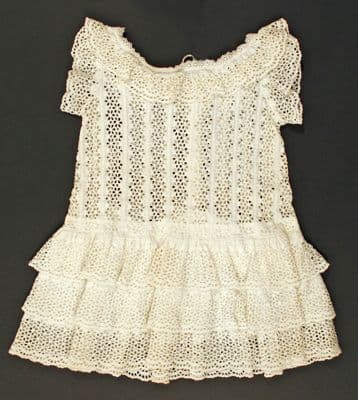
The Edwardian camisole's delicate cotton lattice and the Rococo velvet panel's bold geometric grid are separated by 135 years and an ocean of social change, yet both deploy the same visual language of containment and display. Where the Spanish velvet uses raised pile to cast shadows in its rigid compartments—each square a dark cell that catches light like a jewel—the cotton openwork reverses the equation, making the holes themselves the ornament through precise negative space.
Worn with·chemiseWorn with·corsetWorn with·petticoat
SHARED60 years · cross-culture
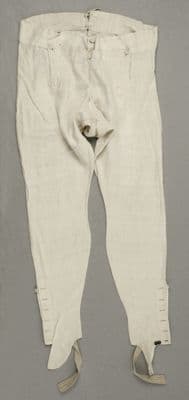
The emerald velvet's geometric quilting and the linen pantaloons' gathered drawstring waist reveal the 18th century's obsession with controlling volume through strategic compression—one creating architectural rigidity, the other soft, billowing fullness.
Worn with·chemiseWorn with·corsetTechnique·hand-weaving
SHARED70 years · cross-culture
Echoes Across Time
Victorian Late / Bustle → Rococo · 110yr58%
SHARED
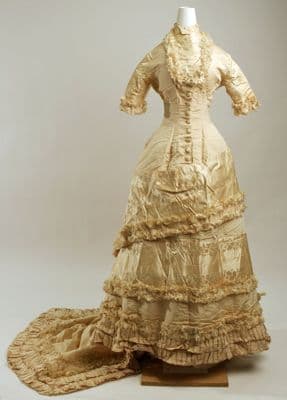
The Victorian bustle gown's cascading tiers of cream silk and that Spanish velvet panel's geometric quilting both deploy the same fundamental strategy: using repetitive surface manipulation to transform flat fabric into sculptural architecture. Where the 18th-century Spanish piece creates rigid geometric order through its diamond-quilted grid, the American wedding dress a century later uses gathered ruffles to build organic, wave-like volume that flows from fitted bodice to dramatic train.
Worn with·chemiseWorn with·corsetWorn with·petticoat
Pull the Thread→
Follow this garment wherever the graph leads