THE MET
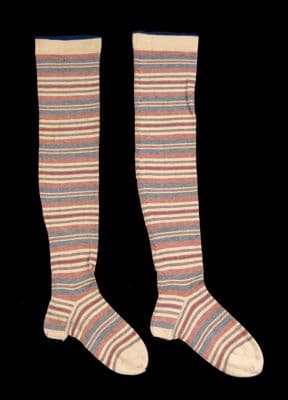
Striped Cotton Knee-High Stockings Cream Red Blue
Victorian Late / Bustle · 1870s-1890s · American
Production
mass-produced
Material
cotton
Culture
American
A pair of knee-high cotton stockings featuring horizontal stripes in alternating bands of cream, red, blue, and brown. The stockings are constructed with a ribbed knit technique that creates a close-fitting silhouette typical of Victorian hosiery. The striped pattern runs continuously from toe to top, with consistent band widths throughout. The heel and toe areas appear reinforced, showing the practical construction methods of the period. These stockings represent the growing availability of machine-knitted hosiery in America during the late Victorian era, when colorful patterns became more accessible to middle-class consumers through industrial textile production.
tights/stockingstight fitknee length
Connected To
57%
Worn with·chemiseWorn with·corsetWorn with·petticoat
SHARED60 years · cross-culture · cross-category
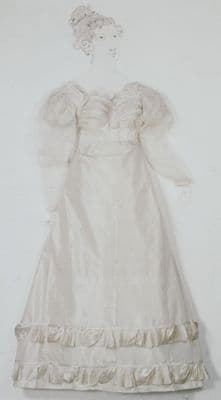
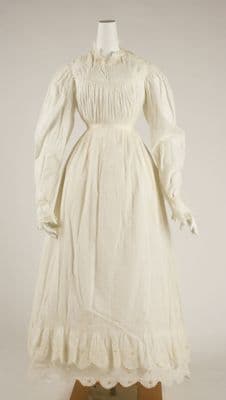
These striped cotton stockings and the cream muslin dress are separated by decades but united by the Victorian obsession with controlled femininity through layers. The stockings' precise horizontal stripes—red, blue, and cream bands that march up the leg like a regimental flag—would have been completely hidden beneath the dress's cascading ruffles and pin-tucked bodice, yet both pieces required the same architectural foundation of chemise, corset, and petticoat to function.
Text62%
Image69%
57%
Worn with·chemiseWorn with·corsetWorn with·petticoat
SHARED20 years · cross-culture · cross-category
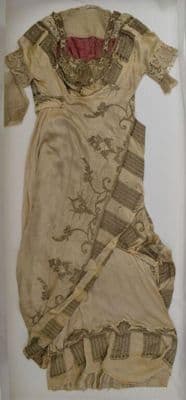
These striped cotton stockings and the pale gold satin dress represent the bookends of an era's relationship with display and concealment. The stockings, with their bold horizontal bands of cream, red, and blue, were meant to flash tantalizingly beneath lifted skirts during the 1880s bustle period—a calculated peek of color and pattern in an otherwise rigidly modest silhouette.
Worn with·chemiseWorn with·corsetWorn with·petticoat
SHARED50 years · cross-category
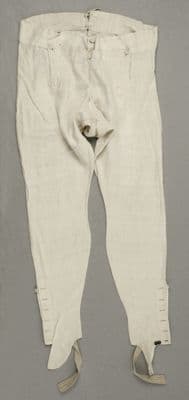
These two pieces of Victorian underwear reveal how even the most hidden layers of dress carried visual weight. The striped stockings, with their rhythmic bands of red, cream, and blue, brought pattern and color to legs that would never be seen, while the drawstring pantaloons above them maintained the era's obsession with modesty through their generous cut and ankle ties.
Worn with·chemiseWorn with·corsetWorn with·petticoat
SHARED50 years · cross-category
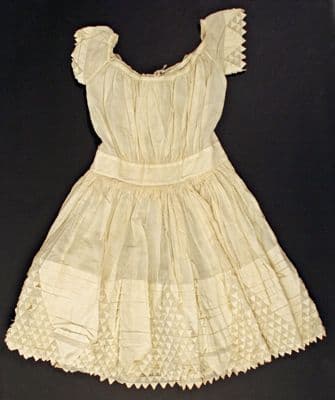
These pieces reveal how Victorian propriety played out in parallel universes of visibility and concealment. The stockings' bold red-white-blue stripes — practically patriotic bunting wrapped around the leg — were meant to flash only in glimpses beneath heavy skirts, while the dress's elaborate whitework embroidery at the hem served as a demure billboard for domestic virtue.
Echoes Across Time
Victorian Late / Bustle → Romantic · 60yr57%
SHARED
These striped cotton stockings and the cream muslin dress are separated by decades but united by the Victorian obsession with controlled femininity through layers. The stockings' precise horizontal stripes—red, blue, and cream bands that march up the leg like a regimental flag—would have been completely hidden beneath the dress's cascading ruffles and pin-tucked bodice, yet both pieces required the same architectural foundation of chemise, corset, and petticoat to function.
Worn with·chemiseWorn with·corsetWorn with·petticoat
Pull the Thread→
Follow this garment wherever the graph leads