THE MET
Cream Cotton Muslin Romantic Fit and Flare Dress
Romantic · 1820s · British
Production
handmade
Material
cotton muslin
Culture
British
Influences
Empire waistline transition · Neoclassical simplicity
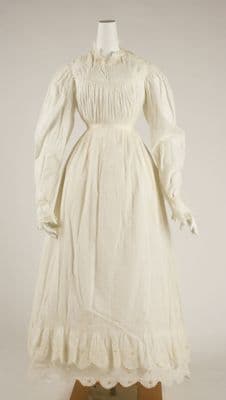
This white cotton dress exemplifies Romantic period styling with its high neckline, long fitted sleeves, and full skirt reaching to the ankles. The bodice features vertical pin-tucking or pleating down the front, creating textural interest while maintaining the period's emphasis on a natural waistline. The sleeves are close-fitting with gathered fullness at the shoulders, typical of 1820s construction. The skirt falls in generous folds from the waist, with a deep ruffle or flounce at the hem that adds movement and visual weight. The lightweight cotton fabric drapes softly, reflecting the era's preference for natural fibers and comfortable, less restrictive silhouettes compared to earlier Empire styles.
dressfit and flarehigh neckfloor length
Connected To
58%
Worn with·chemiseWorn with·corsetWorn with·petticoat
SHARED80 years · cross-culture
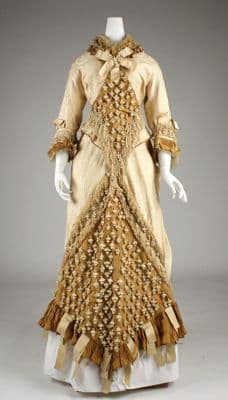
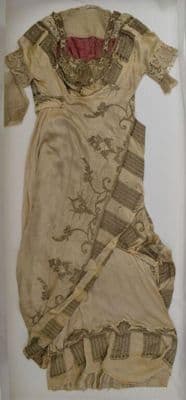
The white muslin dress with its pin-tucked bodice and tiered ruffles speaks the same romantic language as the pale satin gown's elaborate draping and gilt embroidery, but across an ocean of social change. Where the earlier dress whispers Romantic innocence through its high neck and cottage-garden simplicity, the Edwardian confection shouts luxury with its asymmetrical swags and metallic threads—both requiring the same arsenal of undergarments to achieve their idealized silhouettes.
Echoes Across Time
Romantic → Edwardian · 80yr58%
SHARED
The white muslin dress with its pin-tucked bodice and tiered ruffles speaks the same romantic language as the pale satin gown's elaborate draping and gilt embroidery, but across an ocean of social change. Where the earlier dress whispers Romantic innocence through its high neck and cottage-garden simplicity, the Edwardian confection shouts luxury with its asymmetrical swags and metallic threads—both requiring the same arsenal of undergarments to achieve their idealized silhouettes.
Worn with·chemiseWorn with·corsetWorn with·petticoat
Pull the Thread→
Follow this garment wherever the graph leads