Victorian Late / Bustle · 1870s-1880s · American
Production
handmade
Material
silk velvet
Culture
American
Influences
1880s bustle silhouette · Victorian formal evening wear
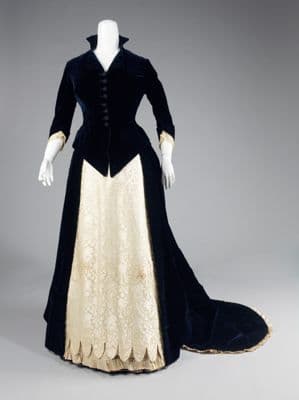
This formal evening gown features a fitted bodice with a deep V-neckline and long sleeves, constructed from dark navy silk velvet. The bodice is closely tailored with what appears to be front lacing or button closure, creating the characteristic corseted silhouette of the 1880s. The skirt combines two contrasting fabrics: a cream-colored silk or satin front panel with decorative scalloped hem treatment, and dark velvet side panels that extend into a dramatic floor-length train. The construction demonstrates the period's emphasis on structural tailoring and the bustle silhouette, with the train indicating this garment's formal evening purpose. The contrast between the light front panel and dark velvet creates visual interest while maintaining the era's preference for rich, substantial fabrics.


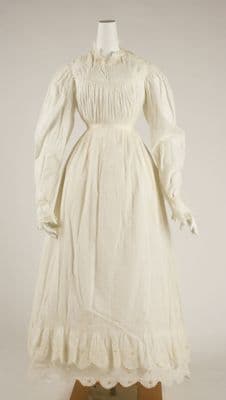
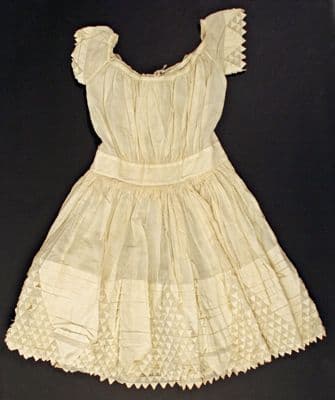
The navy velvet's razor-sharp tailoring and that dramatically pointed bodice couldn't look more different from the cream muslin's soft gathering and romantic ruffles, yet both dresses understand the same fundamental truth about feminine power: the waist as focal point.

Follow this garment wherever the graph leads
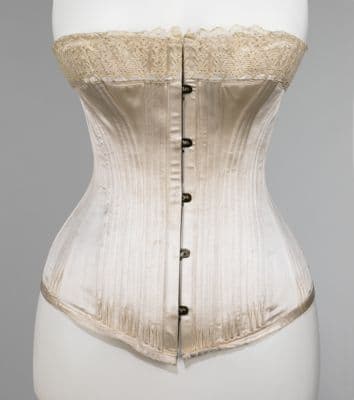
This navy velvet gown and cream satin corset reveal the Victorian obsession with architectural reshaping of the female form—the corset's dramatic wasp waist creating the foundation for the dress's impossibly fitted bodice that nips in like a second skin before flaring into that theatrical bustle silhouette. The corset's precise vertical boning channels echo in the dress's knife-sharp princess seaming, both garments treating the torso as pure geometry to be manipulated.
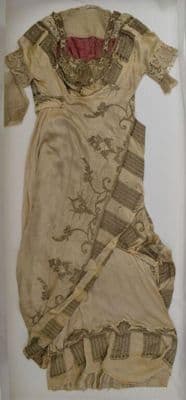
These two gowns reveal how the Victorian obsession with architectural silhouette gave way to Edwardian fluidity, yet both deploy the same seductive strategy: the fitted bodice that transforms a woman's torso into a sculpted object of desire. The navy velvet's severe military-inspired closure and knife-sharp waist create a commanding verticality that the later gold satin echoes but softens, trading the Victorian's corseted aggression for languid draping that still clings to every curve.
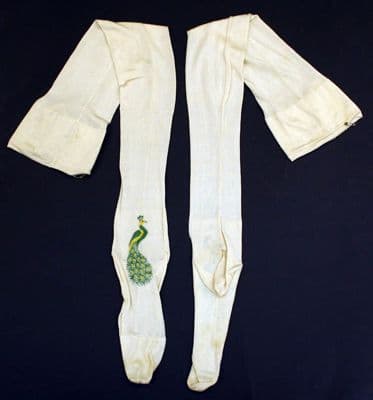
The navy velvet gown's dramatic train sweeping the floor would have completely concealed these cream silk stockings with their cheeky embroidered peacocks—a perfect example of Victorian fashion's genius for hidden luxury. While the dress performs respectability in somber velvet, those stockings whisper rebellion beneath layers of petticoats, their peacock motifs as bold as anything dared above the ankle. It's the era's signature move: propriety as performance, pleasure as secret.
The navy velvet's razor-sharp tailoring and that dramatically pointed bodice couldn't look more different from the cream muslin's soft gathering and romantic ruffles, yet both dresses understand the same fundamental truth about feminine power: the waist as focal point.

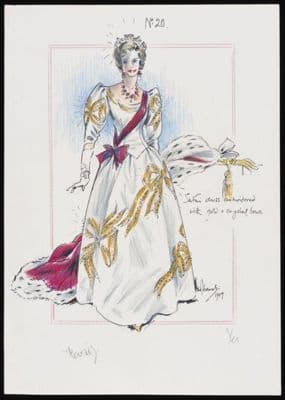
These two court gowns, separated by three centuries, reveal how power dressing transcends time through sheer architectural ambition. The Victorian bustle dress achieves its commanding presence through that dramatic navy velvet train and the rigid geometry of its fitted bodice, while the Elizabethan court gown deploys an equally theatrical arsenal—those puffed sleeves, the stiff brocaded bodice, and that impossibly wide skirt that forces everyone else to step aside.