V&A
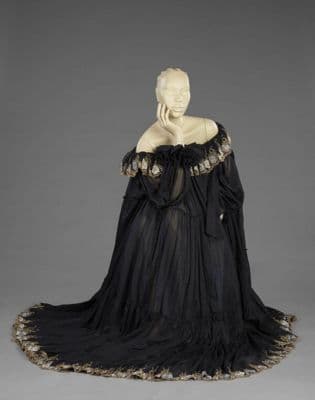
Black Silk Mourning Gown with Gold Metallic Trim
2020s · 2020s · European
Production
haute couture
Material
silk
Culture
European
Movement
Dopamine Dressing
Influences
1870s off-shoulder evening wear · Victorian mourning dress protocols
This formal mourning gown features a dramatically fitted black bodice with an extremely low, off-shoulder neckline bordered by elaborate gold metallic trim or lace. The sleeves are full and gathered, falling off the shoulders in the characteristic style of the 1870s. The skirt extends into a substantial circular train that pools dramatically on the floor, indicating the garment's formal ceremonial purpose. Gold metallic trim edges the entire hemline of the train, creating a striking contrast against the deep black fabric. The silhouette demonstrates the transitional period between the crinoline era and the emerging bustle period, with its emphasis on a fitted torso and voluminous skirt supported by structured undergarments.
dressa-lineoff-the-shoulderfloor length
Connected To
70%
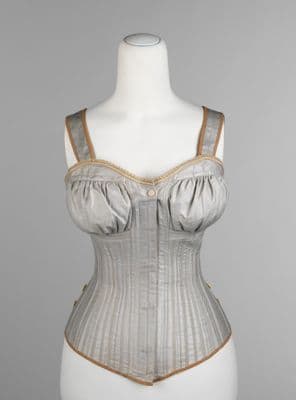
Worn with·bustle padWorn with·chemiseWorn with·corset
Echoes Across Time
Fin de Siecle / Gibson Girl → 2020s · 130yr70%
SHARED
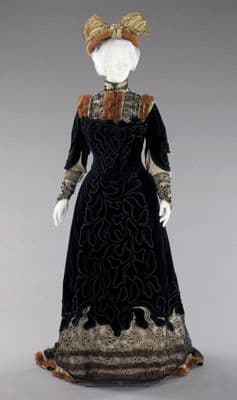
These two gowns speak the same visual language of luxurious mourning, separated by 130 years but united by their understanding that grief doesn't preclude grandeur. The fin de siècle ensemble uses its rich black velvet as a canvas for elaborate gold metallic embroidery that traces botanical motifs across the hem and bodice, while the contemporary gown employs similar gold threadwork but with a more restrained hand—delicate florals that whisper rather than announce.
Worn with·bustle padWorn with·chemiseWorn with·corset
Pull the Thread→
Follow this garment wherever the graph leads