THE MET
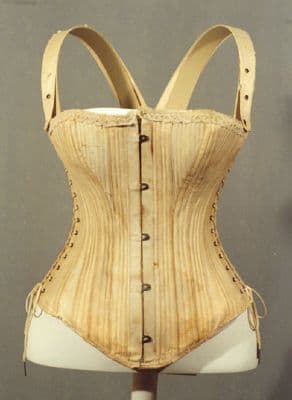
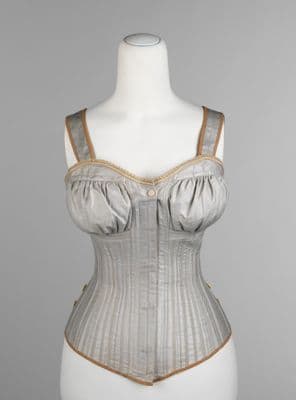
Pale Blue Cotton Coutil Victorian Corset
Fin de Siecle / Gibson Girl · 1890s · American
Production
ready-to-wear
Material
cotton coutil
Culture
American
Influences
Gibson Girl silhouette · S-curve posture
This late Victorian corset features a structured cotton coutil construction with vertical steel boning channels creating a rigid silhouette. The garment extends from bust to hip with a pronounced waist suppression typical of the 1890s hourglass ideal. Brown leather or fabric trim edges the bust cups and waistline, while adjustable shoulder straps provide support. The front features a busk closure system with multiple hook-and-eye fastenings. The pale blue-gray fabric shows subtle striping from the coutil weave. This corset would have created the fashionable S-curve silhouette of the Gibson Girl era, pushing the bust forward while drawing the waist dramatically inward.
top/t-shirt/sweatshirttight fitsweetheartabove-the-hip
Connected To
Influences·Gibson Girl silhouetteWorn with·chemise
SHARED10 years · cross-culture · cross-category
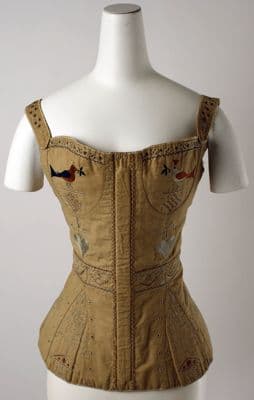
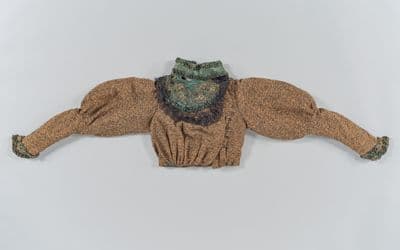
These two garments reveal how the Gibson Girl's commanding silhouette crossed every social boundary at the turn of the century, demanding the same architectural precision whether you were lacing into a pale blue coutil corset or cinching a wool bodice with jade silk trim. The corset's rigid vertical boning and the bodice's fitted torso both engineer that distinctive S-curve—the thrust-forward bust over a wasp waist that made every woman look like she could run a railroad company.
Pull the Thread→
Follow this garment wherever the graph leads