Victorian Late / Bustle · 1870s-1880s · American or European
Production
ready-to-wear
Material
cotton coutil
Culture
American or European
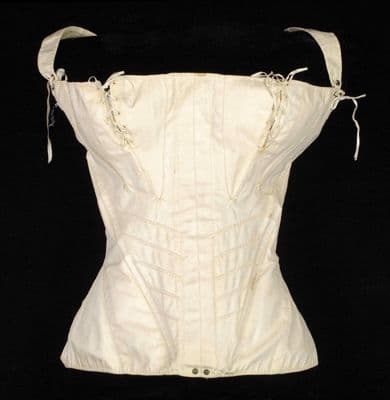
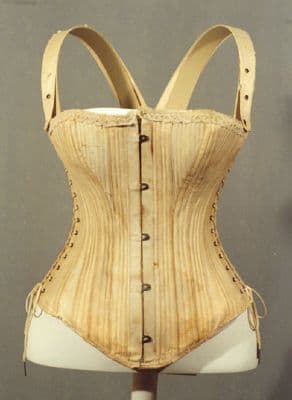
This Victorian corset displays the characteristic hourglass silhouette of the bustle era, constructed from cream-colored cotton coutil with vertical boning channels creating a ribbed texture throughout. The front features a busk closure with multiple metal clasps running down the center, while adjustable shoulder straps connect to the bust cups. Side lacing allows for precise fit adjustment. The corset extends from bust to hip level, creating the dramatic waist compression typical of 1870s undergarments. The construction shows machine stitching along the boning channels, with reinforced stress points at the bust and waist. The cotton coutil fabric provides the necessary strength for structural support while remaining relatively lightweight compared to earlier corset materials.


These two corsets share the same architectural imperative—that rigid front busk running down the center like a ship's keel—but a century of evolution separates their approaches to containing the female form. The earlier stays rely on whalebone's natural flexibility and cotton's honest utility, while the Victorian corset deploys the industrial age's precision-cut coutil and mass-produced steel boning to achieve a more severe, geometric silhouette.


Follow this garment wherever the graph leads
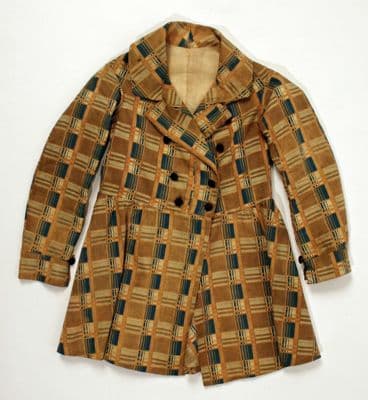
These two Victorian pieces speak the same architectural language beneath their surface differences—both engineered to sculpt the fashionable silhouette of the 1870s-80s with military precision. The corset's whalebone channels and front-lacing system mirror the coat's sharp tailoring and regimented button closure, each designed to cinch and control the female form into the era's coveted hourglass shape.
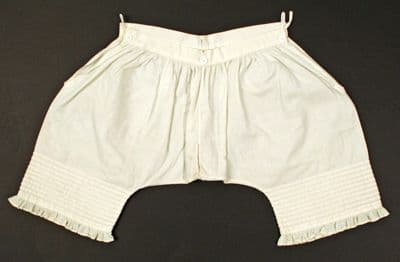
These two pieces reveal the hidden architecture of Victorian propriety, where the corset's rigid vertical boning and precise button closure imposed order on the female form while the drawers' loose, gathered cotton provided modesty beneath. The twenty-five years between them trace a shift from the earlier period's softer silhouettes (requiring only the drawers' basic coverage) to the later era's engineered curves that demanded the corset's structural intervention.
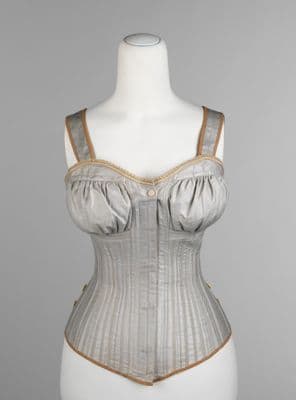
These two corsets reveal how the Victorian silhouette evolved from architectural severity to softer sensuality within a single decade. The earlier cream corset is all business—those sharp, unforgiving vertical lines and utilitarian straps speak to the rigid geometry of 1880s fashion, when the wasp waist was achieved through sheer structural force.
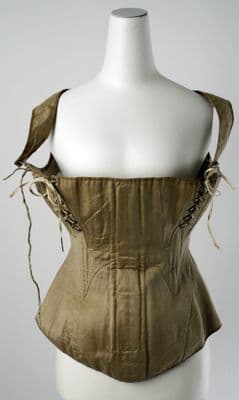
These corsets share the same architectural ambition: that aggressive wasp-waist silhouette carved by steel boning and tight lacing, creating an almost violent hourglass that defies the natural body beneath. The Victorian piece in cream coutil shows the technique at its most refined—note how the bust cups are engineered like tiny suspension bridges, while the olive cotton version reveals the same structural DNA in a more utilitarian execution.