THE MET
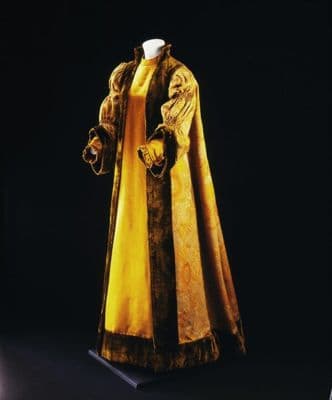
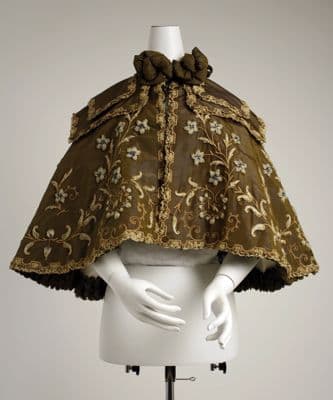
Olive Green Silk Opera Cape with Gold Embroidery
Victorian Late / Bustle · 1860s-1870s · French
Production
handmade
Material
silk with wool embroidery
Culture
French
Movement
Aesthetic Movement
Influences
Ottoman textile traditions · Renaissance revival embroidery
A luxurious short cape designed for opera attendance, featuring rich olive-green silk as the base fabric. The garment displays elaborate floral embroidery executed in cream and gold wool threads, creating an all-over botanical pattern of scrolling vines, flowers, and leaves. The cape fastens at the neck with decorative ribbon ties and features wide, flowing sleeves that extend to approximately elbow length. Golden braided trim edges the garment, while the interior is lined with contrasting fabric. The silhouette is characteristic of 1880s evening wear, designed to drape elegantly over the large bustled silhouettes of the period without restricting the wearer's movement in theater seating.
capetenthigh neckhip length
Connected To
Movement·Aesthetic MovementWorn with·bustleWorn with·evening gown
Echoes Across Time
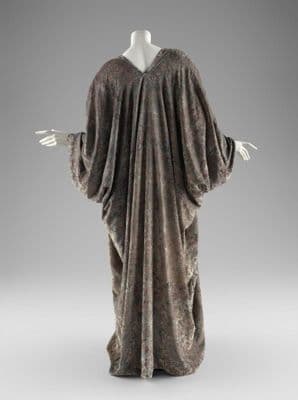
Victorian Late / Bustle → Roaring Twenties / Art Deco · 40yr57%
SHARED
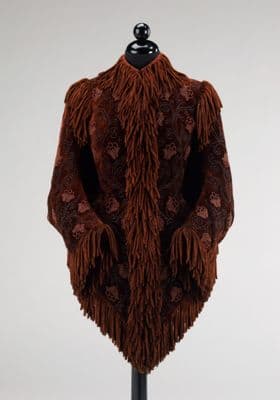
Both garments breathe with the same Aesthetic Movement obsession with rich, muted olive tones and the kind of luxurious weight that makes fabric feel like liquid metal. The Victorian cape's gold embroidered florals and the 1920s caftan's metallic silk velvet speak the same visual language — that deliberate rejection of bright, cheerful color in favor of something more mysterious and sophisticated.
Movement·Aesthetic Movement
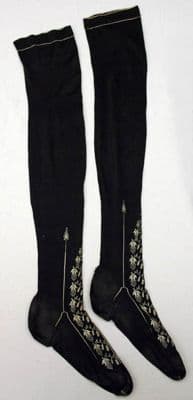
Victorian Late / Bustle → Romantic
Pull the Thread→
Follow this garment wherever the graph leads