V&A
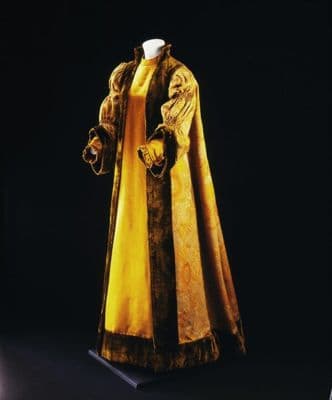
Golden Yellow Silk Cotton Brocade Tea Gown
Fin de Siecle / Gibson Girl · 1890s · British
Designer
Liberty & Co.
Production
ready-to-wear
Material
silk and cotton brocade
Culture
British
Movement
Aesthetic Movement · Dress Reform Movement
Influences
Japanese kimono construction · Aesthetic Movement dress reform
This tea gown displays the characteristic robe-like construction popular in the 1890s, featuring a flowing silhouette that bypassed the need for tight corseting. The garment is crafted from rich golden-yellow brocaded silk and cotton, with darker brown trim or contrasting fabric panels creating visual definition. The construction appears to wrap or overlap at the front, with wide sleeves that taper toward fitted cuffs. The full-length design falls in graceful folds to the floor, embodying the Aesthetic Movement's preference for comfortable, artistic dress. The luxurious brocade fabric shows subtle pattern work typical of Liberty & Co.'s sophisticated textile designs, reflecting the era's fascination with exotic and historical textile traditions.
dressloose fithigh neckfloor length
Connected To
Influences·Japanese kimono constructionTechnique·drapingMotif·abstract-organic
Echoes Across Time
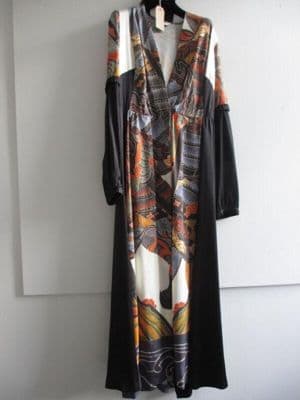
Bohemian / Hippie → Fin de Siecle / Gibson Girl · 120yr69%
SHARED
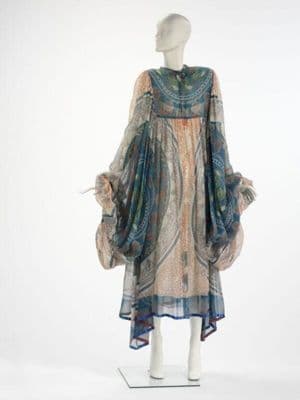
Both garments drink from the same well of Japanese influence, but centuries apart: the fin de siècle tea gown borrows the kimono's languid drape and ceremonial weight in golden brocade, while the 1970s dress lifts its wide sleeves and graphic sensibility, translating traditional motifs into psychedelic swirls across black silk.
Influences·Japanese kimono constructionTechnique·drapingMotif·abstract-organic
Pull the Thread→
Follow this garment wherever the graph leads