V&A
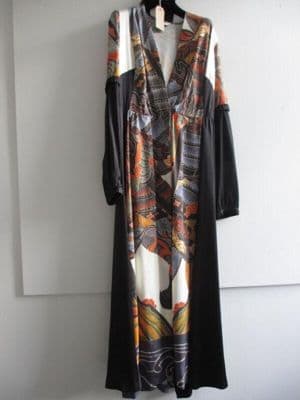
Black Orange Silk Kimono-Inspired Maxi Dress
Bohemian / Hippie · 2010s · Belgian
Designer
Dries Van Noten
Production
ready-to-wear
Material
printed silk
Culture
Belgian
Movement
Japonisme
Influences
Japanese kimono construction · 1970s maxi dress silhouette
A floor-length dress with dramatic kimono-inspired sleeves and deep V-neckline, constructed from lightweight printed silk. The garment features a complex Japanese-influenced print combining geometric patterns, floral motifs, and abstract designs in warm earth tones against black. The silhouette is loose and flowing with wide, draped sleeves that extend beyond the hands. A black elastic belt cinches the waist, creating definition in the otherwise fluid form. The dress appears to be constructed with minimal seaming to preserve the print's continuity, typical of Van Noten's approach to textile-focused design that bridges Eastern and Western aesthetics.
dressloose fitsurplicemaxi
Connected To
Influences·Japanese kimono constructionTechnique·drapingMotif·abstract-organic
Echoes Across Time
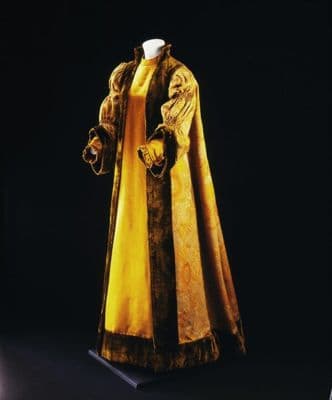
Bohemian / Hippie → Fin de Siecle / Gibson Girl · 120yr69%
SHARED
Both garments drink from the same well of Japanese influence, but centuries apart: the fin de siècle tea gown borrows the kimono's languid drape and ceremonial weight in golden brocade, while the 1970s dress lifts its wide sleeves and graphic sensibility, translating traditional motifs into psychedelic swirls across black silk.
Influences·Japanese kimono constructionTechnique·drapingMotif·abstract-organic
Pull the Thread→
Follow this garment wherever the graph leads