THE MET
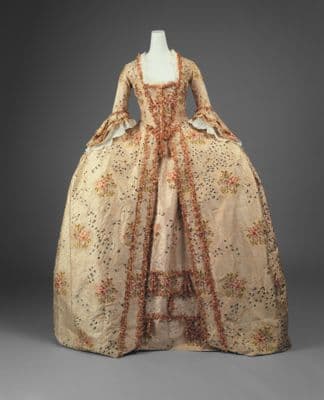
Cream Rose Pink Gold Silk Brocade Gown
Rococo · 1760s · French
Production
handmade
Material
silk brocade
Culture
French
Influences
Watteau pleats · French court mantua tradition
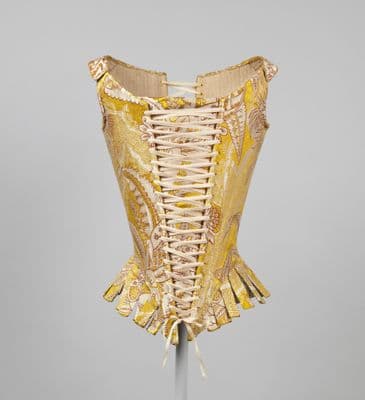
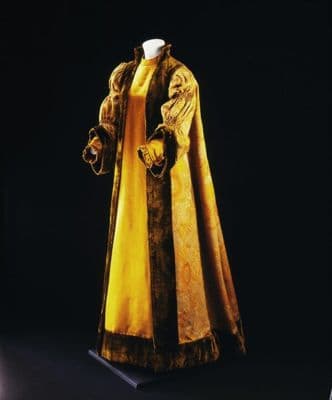
This robe à la française displays the characteristic silhouette of mid-18th century French court dress with a fitted, square-necked bodice that extends into flowing box pleats at the back. The silk brocade features an elaborate woven pattern of scattered floral bouquets in rose pink and gold against a cream ground. The bodice is constructed with front-lacing stays visible through decorative stomacher treatment, while the skirt extends into a wide circumference supported by side panniers. Three-quarter sleeves end in layered engageantes (ruffled cuffs), and the neckline is finished with matching fabric trim. The brocade's repeating floral motifs demonstrate sophisticated Lyonnaise weaving techniques typical of luxury French textiles during the Rococo period.
dressfit and flaresquare necklinefloor length
Connected To
Worn with·chemiseWorn with·staysFunction·court-formal
SHARED60 years · cross-culture · cross-category
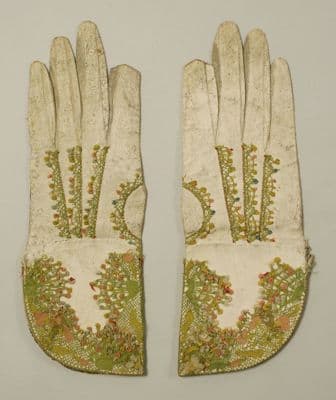
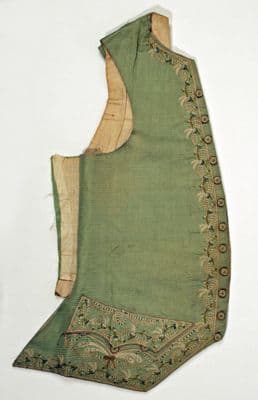
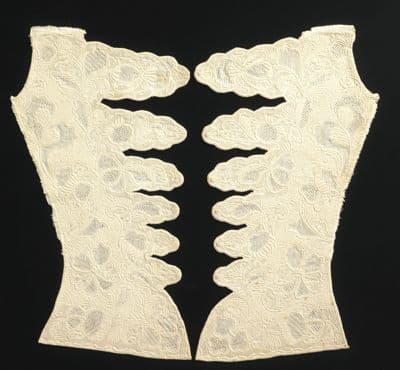
These pieces reveal how the 18th century's obsession with surface ornament evolved from laborious handwork to mechanized luxury. The baroque bodice fronts, with their meticulous whitework embroidery creating raised floral motifs, represent the painstaking needle artistry that once signaled elite status—every vine and bloom hand-stitched into the linen.
Pull the Thread→
Follow this garment wherever the graph leads