THE MET
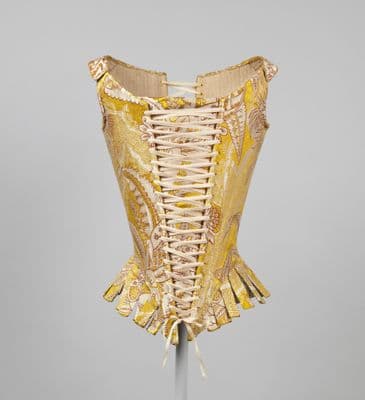
Golden Yellow Silk Brocade Stays Corset
Rococo · 1770s · Italian
Production
handmade
Material
silk brocade
Culture
Italian
Influences
French court fashion · Rococo decorative arts
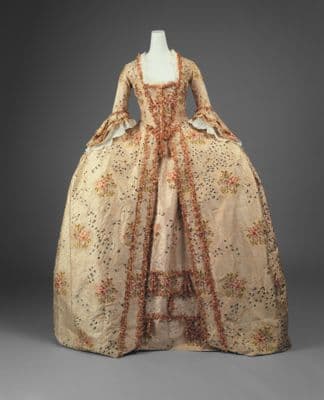
This 18th-century Italian stays corset features a conical silhouette typical of Rococo fashion, constructed from luxurious golden yellow silk brocade with metallic thread highlights. The garment displays front spiral lacing through metal eyelets, creating the characteristic inverted triangular torso shape. The brocade fabric shows elaborate woven patterns in gold and cream, demonstrating the period's preference for rich decorative textiles. Shoulder straps are integrated into the design, and the lower edge features scalloped tabs that would sit over the hips. The construction shows precise tailoring with multiple seaming lines to achieve the rigid, sculptural form that defined feminine silhouette during the Rococo period.
top/t-shirt/sweatshirttight fitsquare necklineabove-the-hip
Connected To
Influences·French court fashionTechnique·brocade-weavingFunction·court-formal
SHARED10 years · cross-culture · cross-category
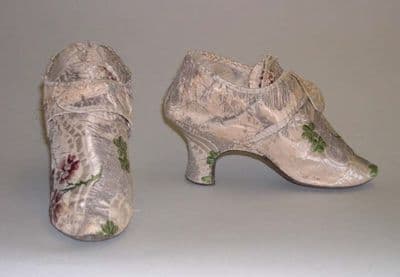
These pieces speak the same gilded language of 18th-century court excess, where even underwear demanded theatrical opulence. The stays' golden brocade echoes the shoes' silk weave in its lustrous density, both fabrics catching light like precious metal—a shared vocabulary of conspicuous luxury that declared status before the wearer even entered the room.
Echoes Across Time
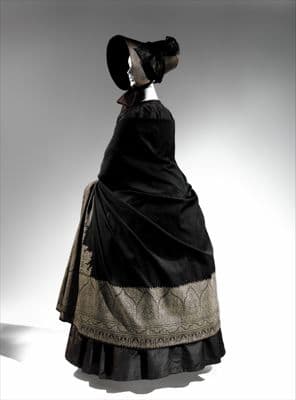
Victorian Late / Bustle → Rococo · 110yr61%
SHARED
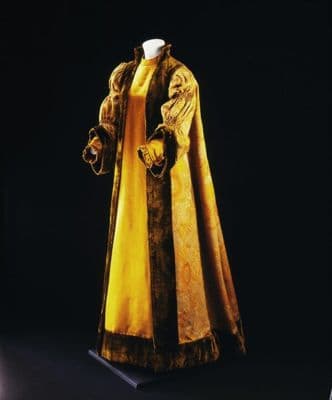
The Victorian bustle dress and the rococo stays are separated by over a century, but both reveal fashion's eternal obsession with architectural silhouette-making. Where the golden brocade stays literally sculpt the torso with their geometric lacing and metallic gleam, the black taffeta dress achieves the same structural ambition through volume and draping—that telltale bustle creating the period's signature backward thrust.
Worn with·chemiseWorn with·petticoatTechnique·brocade-weaving
Pull the Thread→
Follow this garment wherever the graph leads