THE MET
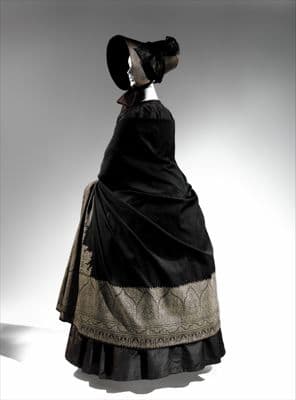
Black Silk Taffeta Victorian Bustle Day Dress
Victorian Late / Bustle · 1870s-1880s · American
Production
ready-to-wear
Material
silk taffeta
Culture
American
Influences
French Second Empire silhouette · bustle pad construction
This Victorian bustle dress features a fitted black silk taffeta bodice with long sleeves and high neckline typical of 1870s daywear. The skirt displays the characteristic bustle silhouette with fullness concentrated at the back, falling in structured folds to the floor. A wide decorative band of gold and cream brocade or jacquard weaving encircles the lower skirt, creating visual weight and horizontal emphasis. The dress demonstrates typical Victorian layered construction with multiple fabric weights and textures. The silhouette shows the transitional period when the crinoline was giving way to the bustle, with the skirt's volume shifted dramatically rearward. The high collar and covered arms reflect Victorian modesty standards for daytime dress.
dressfit and flarehigh neckfloor length
Connected To
62%
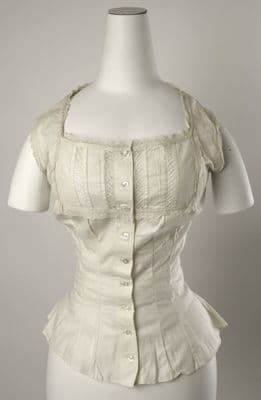
Worn with·bustle padWorn with·chemiseWorn with·corset
Echoes Across Time
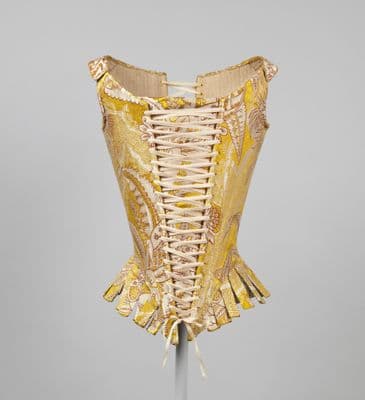
Victorian Late / Bustle → Rococo · 110yr61%
SHARED
The Victorian bustle dress and the rococo stays are separated by over a century, but both reveal fashion's eternal obsession with architectural silhouette-making. Where the golden brocade stays literally sculpt the torso with their geometric lacing and metallic gleam, the black taffeta dress achieves the same structural ambition through volume and draping—that telltale bustle creating the period's signature backward thrust.
Worn with·chemiseWorn with·petticoatTechnique·brocade-weaving
Pull the Thread→
Follow this garment wherever the graph leads