THE MET
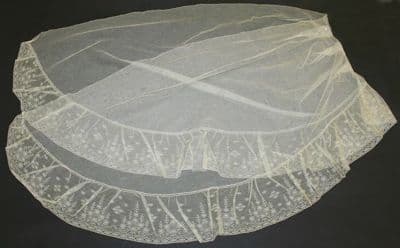
White Cotton Fichu with Lace Trim
Baroque · American
Production
handmade
Material
fine cotton with lace trim
Culture
American
Influences
18th-century modesty covering · French fichu tradition
A triangular fichu made of fine white cotton or linen with delicate lace edging along all borders. The garment displays a sheer, lightweight weave typical of 18th-century neckwear accessories. Multiple tiers of narrow lace trim create decorative bands around the perimeter, with the lace appearing to be machine-made rather than hand-worked. The fichu is constructed as a large triangle designed to drape over the shoulders and cross at the chest, providing modest coverage over a low neckline. The fabric appears crisp and well-preserved, showing the characteristic geometric folding pattern when laid flat. This type of neckerchief was essential for achieving proper feminine modesty while maintaining fashionable décolletage in 18th-century dress.
scarf
Connected To
Worn with·chemiseWorn with·gownWorn with·stays
SHARED40 years · cross-culture · cross-category
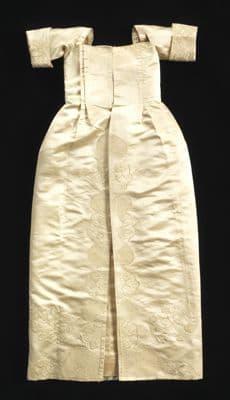
These two pieces reveal how the same aristocratic impulse for pristine white luxury traveled different paths across the Atlantic. The fichu's gossamer layers and delicate lace edging speak to American colonial society's desire to mirror European refinement through imported textiles, while the bodice fronts' dense whitework embroidery represents the European original — that painstaking needlework tradition where status was literally stitched by hand.
Text60%
Image73%
Worn with·chemiseWorn with·gown
SHARED110 years · cross-culture · cross-category
Text58%
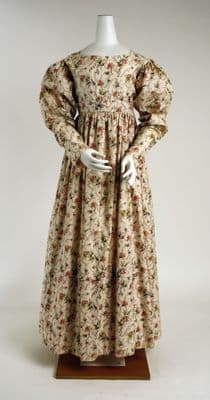
Worn with·chemiseWorn with·stays
SHARED160 years · cross-culture · cross-category
Text51%
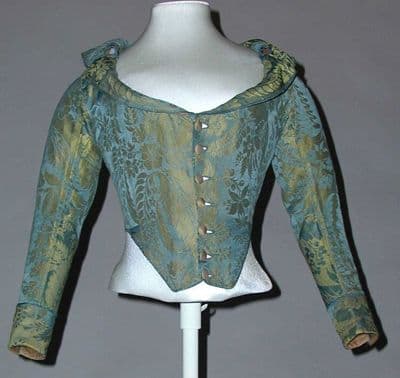
Worn with·chemiseWorn with·stays
SHARED120 years · cross-culture · cross-category
Text48%
Echoes Across Time
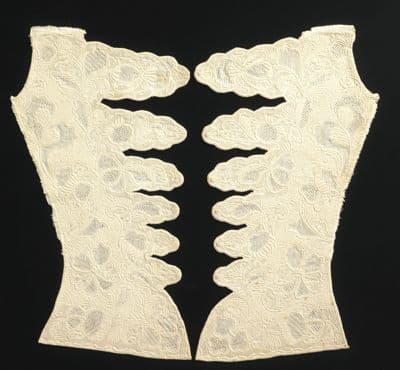
Baroque → Baroque · 40yr64%
SHARED
These two pieces reveal how the same aristocratic impulse for pristine white luxury traveled different paths across the Atlantic. The fichu's gossamer layers and delicate lace edging speak to American colonial society's desire to mirror European refinement through imported textiles, while the bodice fronts' dense whitework embroidery represents the European original — that painstaking needlework tradition where status was literally stitched by hand.
Worn with·chemiseWorn with·gownWorn with·stays
Pull the Thread→
Follow this garment wherever the graph leads