Romantic · 1820s · British
Production
handmade
Material
printed cotton
Culture
British
Influences
Empire waistline · Regency silhouette
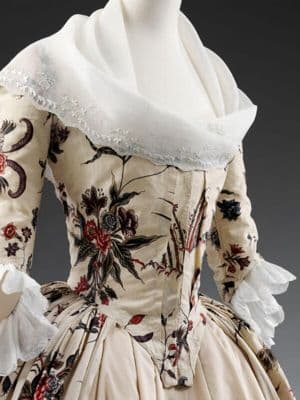
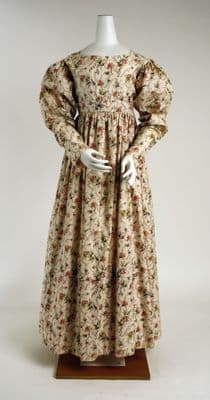
This mid-1820s morning dress exemplifies Romantic era domestic wear with its characteristic high Empire waistline and full, ankle-length skirt. The cream cotton ground features an all-over floral print in burgundy, green, and pink tones. The fitted bodice has a round neckline and long sleeves that gather into fitted cuffs. The skirt falls in generous pleats from the high waist, creating the bell-shaped silhouette typical of the period. The lightweight cotton construction and modest neckline mark this as appropriate daywear for middle-class women, representing the transition from neoclassical simplicity toward the more elaborate ornamentation that would define the Romantic period.
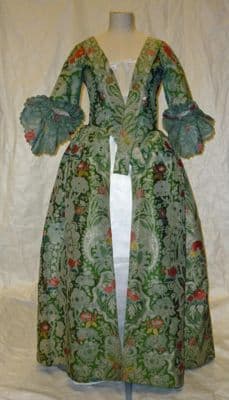
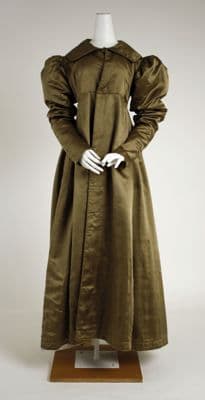
These two gowns reveal how English women's relationship with floral decoration evolved from aristocratic spectacle to bourgeois intimacy. The earlier green silk robe commands attention with its sculptural sleeves and metallic brocade blooms that catch light like jewelry, designed to impress in formal receiving rooms.

These two gowns reveal how English women's relationship with floral decoration evolved from aristocratic spectacle to bourgeois intimacy. The earlier green silk robe commands attention with its sculptural sleeves and metallic brocade blooms that catch light like jewelry, designed to impress in formal receiving rooms.

Follow this garment wherever the graph leads
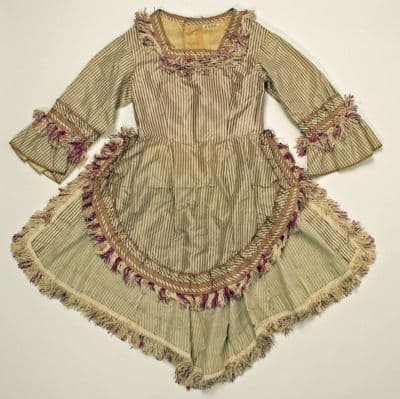
The sage green gown's theatrical cascade of burgundy fringe and its razor-sharp fitted bodice speak the same decorative language as the floral morning dress's gathered sleeves and high-waisted silhouette, but with entirely different intentions. Where the earlier dress performs Rococo excess—that fringe dancing with every step like a courtly flourish—the later cotton frock whispers domestic romanticism, its tiny blooms and gentle gathers suggesting empire waists and Jane Austen heroines.
These two garments reveal how the Romantic era's obsession with volume played out across different scales and purposes. The floral morning dress channels its drama through gathered sleeves that balloon from shoulder to wrist, creating sculptural bulk that transforms the everyday act of dressing into theater.
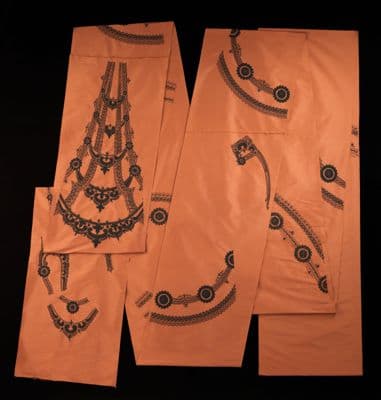
The delicate sprigs scattered across the 1830s morning dress and the bold geometric trim motifs on these 1880s habit pattern pieces reveal how block-printing evolved from whispered florals to architectural statements. Where the earlier dress lets tiny flowers dance freely across cream cotton in that gentle Romantic way, the coral silk pieces map out precise borders and medallions—block-printing now serving Victorian formality rather than pastoral charm.

The sage green gown's theatrical cascade of burgundy fringe and its razor-sharp fitted bodice speak the same decorative language as the floral morning dress's gathered sleeves and high-waisted silhouette, but with entirely different intentions. Where the earlier dress performs Rococo excess—that fringe dancing with every step like a courtly flourish—the later cotton frock whispers domestic romanticism, its tiny blooms and gentle gathers suggesting empire waists and Jane Austen heroines.